For years, sodium-ion has been the perpetual understudy to lithium-ion — cheaper on paper, abundant in raw materials, but never quite ready for prime time. San Diego startup UNIGRID just moved the technology a big step closer to the spotlight, and it did so by passing one of the industry’s tougher gauntlets: Hyundai’s safety validation program.
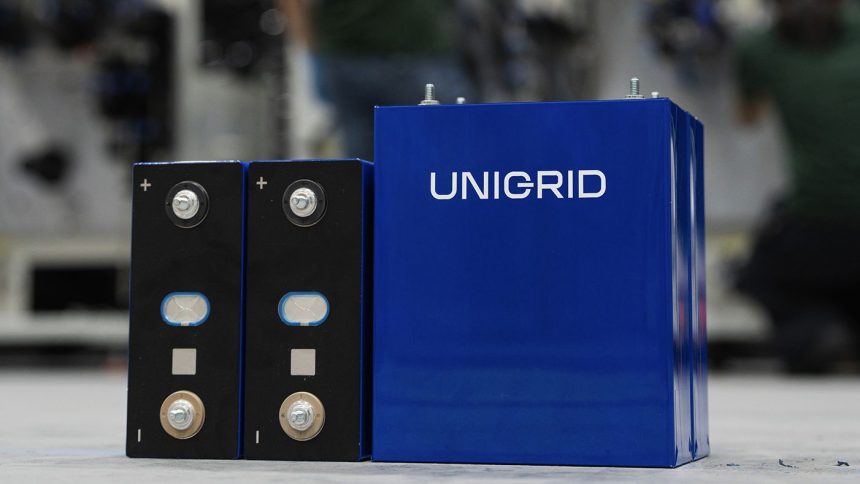
The battery in question is the Na+Casa, UNIGRID’s first-generation residential energy storage system. On August 26, 2026, the company confirmed the pack cleared Hyundai’s testing regime, with independent experts describing sodium-ion as a genuinely compelling alternative to lithium-ion rather than a lab curiosity. That’s a meaningful endorsement for a firm founded only in 2021.
What makes the Na+Casa interesting isn’t just chemistry bragging rights — it’s the numbers. The system offers a 9.25 kWh rated capacity and is engineered for a 25-year operational lifespan. UNIGRID rates it for 10,000 full charge-discharge cycles at 100% capacity, which works out to daily cycling for more than 27 years. In other words, this is a battery designed to outlast the roof it sits under.
The headline safety claim is arguably the biggest draw. UNIGRID states the Na+Casa carries zero fire risk — a pointed contrast to the thermal-runaway anxieties that dog lithium-ion home storage. Just as impressive is its temperature tolerance: the cells are validated to operate across a –20°C to 60°C range for charging. Cold weather has traditionally been kryptonite for battery performance, so a pack that keeps working at –20°C is a serious argument for northern climates.
Under the hood, the Na+Casa uses 210Ah cells with a nominal voltage of 46.4V and a standard charge/discharge current of 50A. Physically, it’s a substantial unit: it weighs 108.9 kg and measures 477 mm x 869 mm x 269 mm — wall-mountable in footprint, but you’ll want help lifting it into place.
Key specs at a glance:
- Capacity: 9.25 kWh rated
- Cycle life: 10,000 cycles at 100% capacity
- Lifespan: 25-year design life
- Cells: 210Ah, 46.4V nominal
- Charge/discharge current: 50A
- Operating temperature: –20°C to 60°C (charging)
- Fire risk: zero
Pricing hasn’t been broken out publicly, though UNIGRID says the Na+Casa is already priced competitively with lithium-ion systems today — which, if accurate, undercuts the usual argument that sodium-ion only wins on cost once volumes scale.
The rollout is already underway. First installations were completed in homes across Europe as of July 2026, meaning this is a shipping product rather than a slide-deck promise. US buyers will have to wait a little longer: availability is expected by the end of 2026, pending North American certification requirements. If sodium-ion is finally ready to graduate, the Na+Casa is making a strong case.