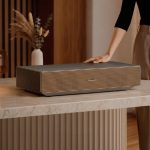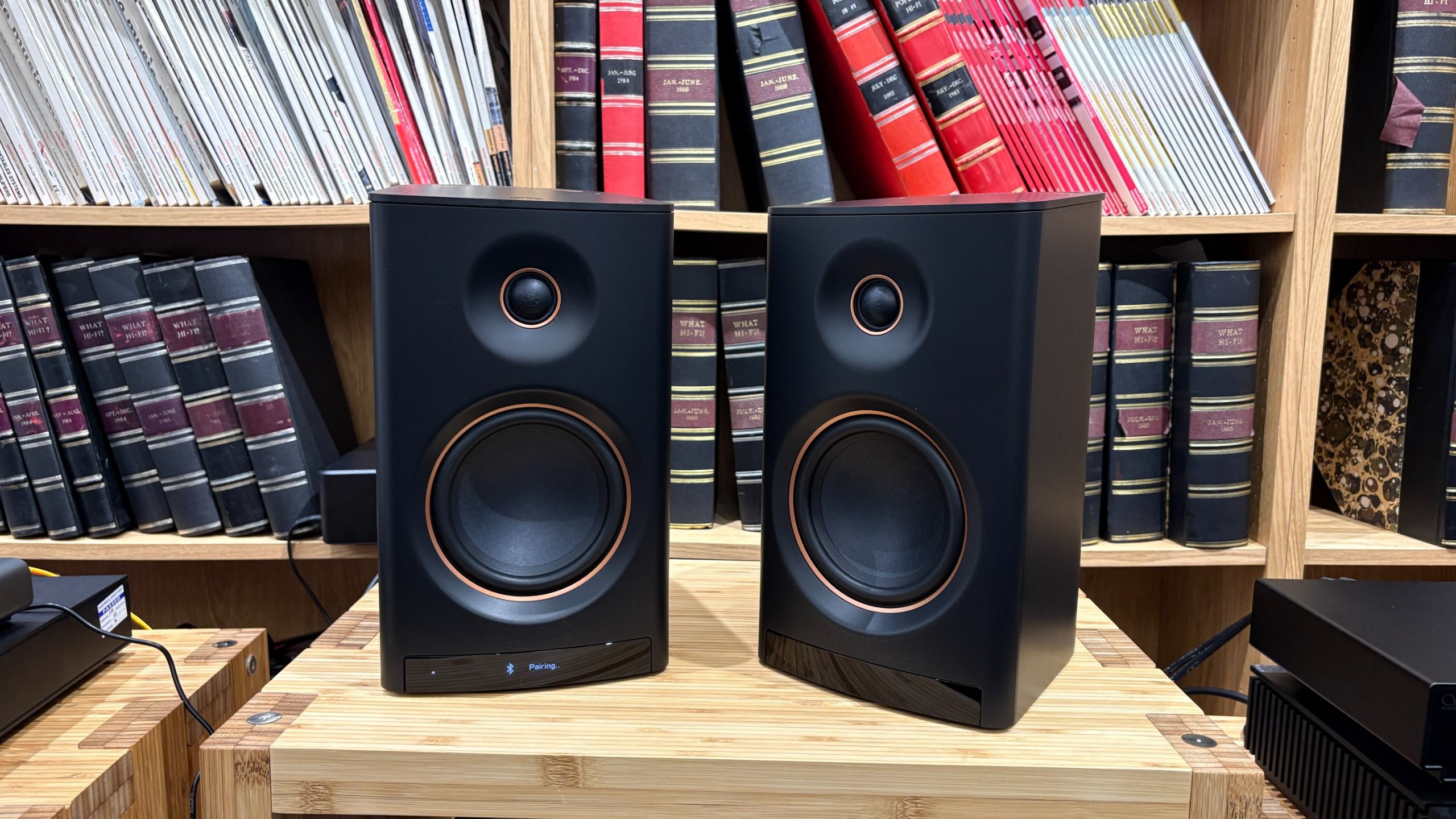
Yamaha’s NX-70A wireless stereo system went on sale in July 2026 at £2590 / $3000, and on September 3, 2026 it collected a four-star verdict from What Hi-Fi?, whose testers praised its “refined sound, deep and well-managed bass and suave looks”. For a newcomer walking straight into territory ruled by the KEF LS50 Wireless II, that is a confident opening statement.
Each cabinet is a two-way active design measuring 33.3 x 18.9 x 23.4cm (hwd), with the primary speaker weighing 5.7kg and the secondary 5.4kg. A 30mm dome tweeter and a 13cm ported mid/bass driver get dedicated amplification of 60W and 100W respectively, and both use Yamaha’s Harmonious Diaphragm material — a blend of Zylon, a strong and lightweight synthetic polymer, with the same spruce wood found in the soundboards of the company’s grand pianos. The rounded rear of each cabinet helps suppress internal standing waves, while a 5mm-thick, copper-accented aluminium top plate adds rigidity and a dash of luxury. Matching SPS-70A stands, 66cm tall, cost an extra £517 / $500, and the speakers screw directly into them for a neatly integrated look.
The internal DAC handles files up to 32-bit/384kHz PCM and DSD256, though the link between the two speakers sets the practical ceiling — 24-bit/48kHz over the wireless connection, rising to 24-bit/96kHz with the included 3m cable. Streaming runs through Yamaha’s MusicCast platform and is generously stocked:
- Spotify Connect, Tidal Connect and Qobuz Connect
- AirPlay 2, Google Cast, internet radio and UPnP playback
- Bluetooth 5.3 and Roon Ready status, over wi-fi or Ethernet
Physical sockets include HDMI eARC for TV duty, optical, a 3.5mm aux input and USB-A for both music playback and firmware updates, plus a subwoofer output. A microphone input serves YPAO, Yamaha’s Parametric Room Acoustic Optimizer, which measures the room with a bundled microphone and counteracts unwanted acoustic effects. What Hi-Fi? found the process took only a few minutes and tightened up bass when the speakers sat close to a rear wall, though in its treated test room the gains came at some cost to midrange detail.
In listening tests the system impressed with composure and poise, reaching deeper and with more authority in the bass than the KEF LS50 Wireless II while keeping low frequencies defined and seamlessly blended. The reviewers also singled out its spatial presentation and the fluid way it moves between quiet and loud passages. The reservations were a sense of rhythmic drive that could be stronger next to the KEF’s steadier grip, a relatively small display and fierce competition at this level.
Still, the conclusion was clear enough — a refined, full-bodied and highly adaptable system that is, in What Hi-Fi?’s words, well worth your attention.