Draw the world before you write it, and sooner or later a reader will ask how anyone crossed it. That, in short, is the trap Brandon Sanderson says epic fantasy sets for itself — and Game of Thrones is his favourite worked example of both the genre’s pull and its failure modes.
The diagnosis came in a conversation with fellow fantasy author Joe Abercrombie, shared on YouTube and written up by Polygon on September 7, 2026. Sanderson started with the case for the defence. “I grew up reading the big epics. I think it’s the most natural form for fantasy in some ways. It gives you a lot of time to dig into that world and immerse yourself in it and explore another place,” he said. “I think that’s why Game of Thrones did well.”
Then the bill arrives. Asked about the downside, Sanderson spoke from experience — burnout is real, and he has had to step away from a manuscript around the tenth pass of the draft. But the structural problem is bigger than fatigue:
“Epic fantasy has this danger. It starts very personal, and then it can drift away from being personal about the characters if you’re not careful. Authors tend to get more excited about side characters later on. We see this happening a bit in Game of Thrones and in A Wheel of Time. How can you make sure something that big remains fresh and personal and exciting? That’s a real challenge with the genre.”
This is where the maps come in. When the two writers last spoke, in 2025, around the release of Abercrombie’s The Devils, Sanderson asked whether his colleague really disliked them. “I mean, I love maps,” Abercrombie replied. “But I think they need to be exercised in the right way. I suppose what I don’t like is a kind of lazy application of maps.” Writing The First Law, he added, he wanted a story told “almost in tight closeup on the people” — opening on the widest shot imaginable felt like the wrong tone entirely.
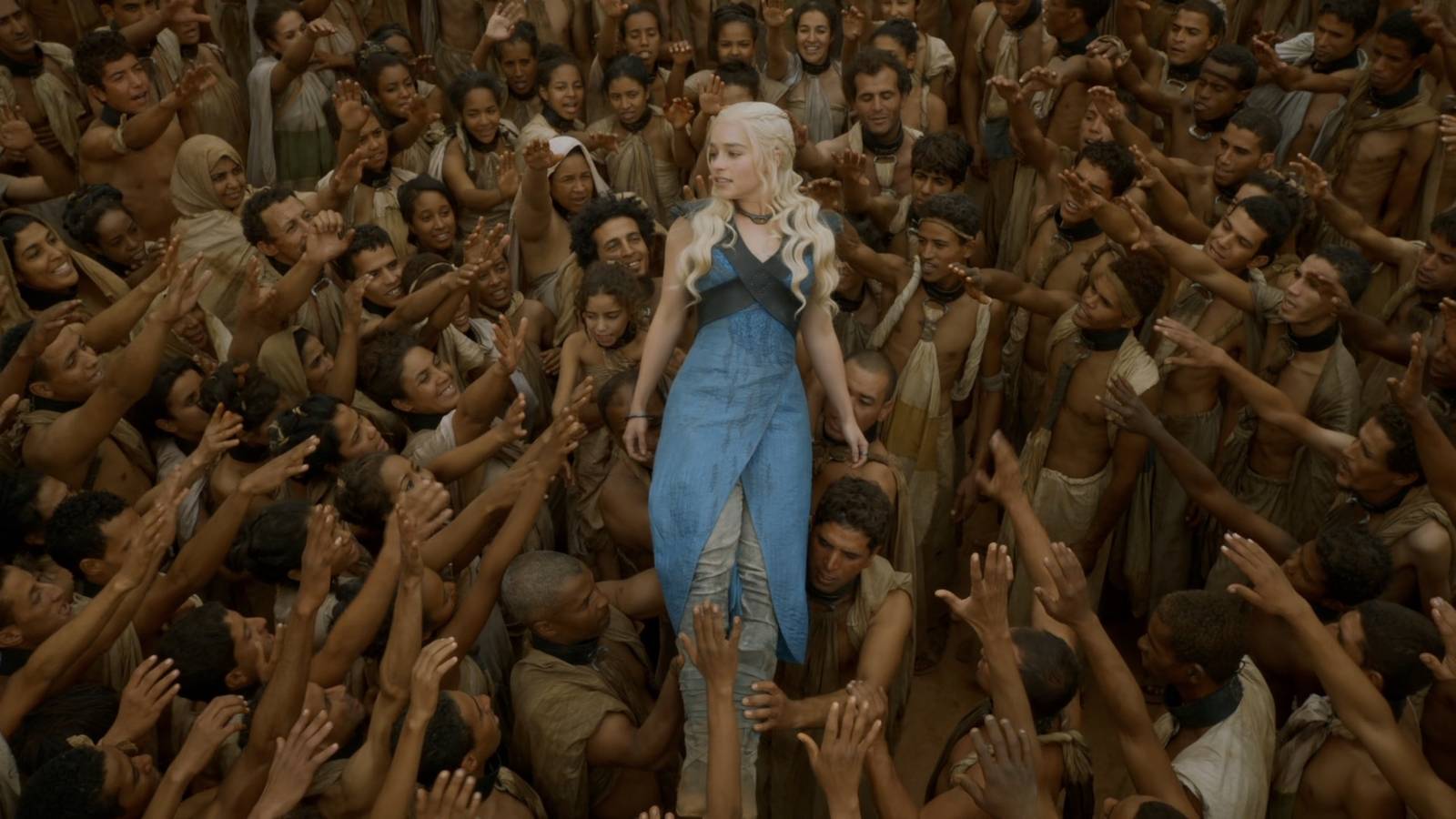
A map is a promise of realism, and promises get audited. “And once you put the map in, you run into some problems,” Sanderson said. “Maybe like some later Game of Thrones seasons, we’re like, ‘Well, how did they get from here to here?'” He was quick to add the caveat every fantasy reader will recognise: “And when you’re trying to be very realistic when presenting some of that stuff, it can get you into trouble. I still love them.”
George R.R. Martin knows the scope problem intimately. A Song of Ice and Fire is planned as 7 books; 5 have been published; Winds of Winter has been in progress for the past 15 years, with HBO’s adaptation racing past the novels in the saga’s chronology.
There is a reason Sanderson keeps circling back to it. After a deal with Apple covering his Cosmere books, he is writing a screenplay for a Mistborn movie, with a Stormlight Archive pilot next. “Once I finish the Mistborn screenplay, my next project will be getting a pilot for Stormlight and then trying to get the whole season worked through,” he said in comments reported in May 2026. Martin’s decade-plus of ups and downs is the closest available model for how that goes.