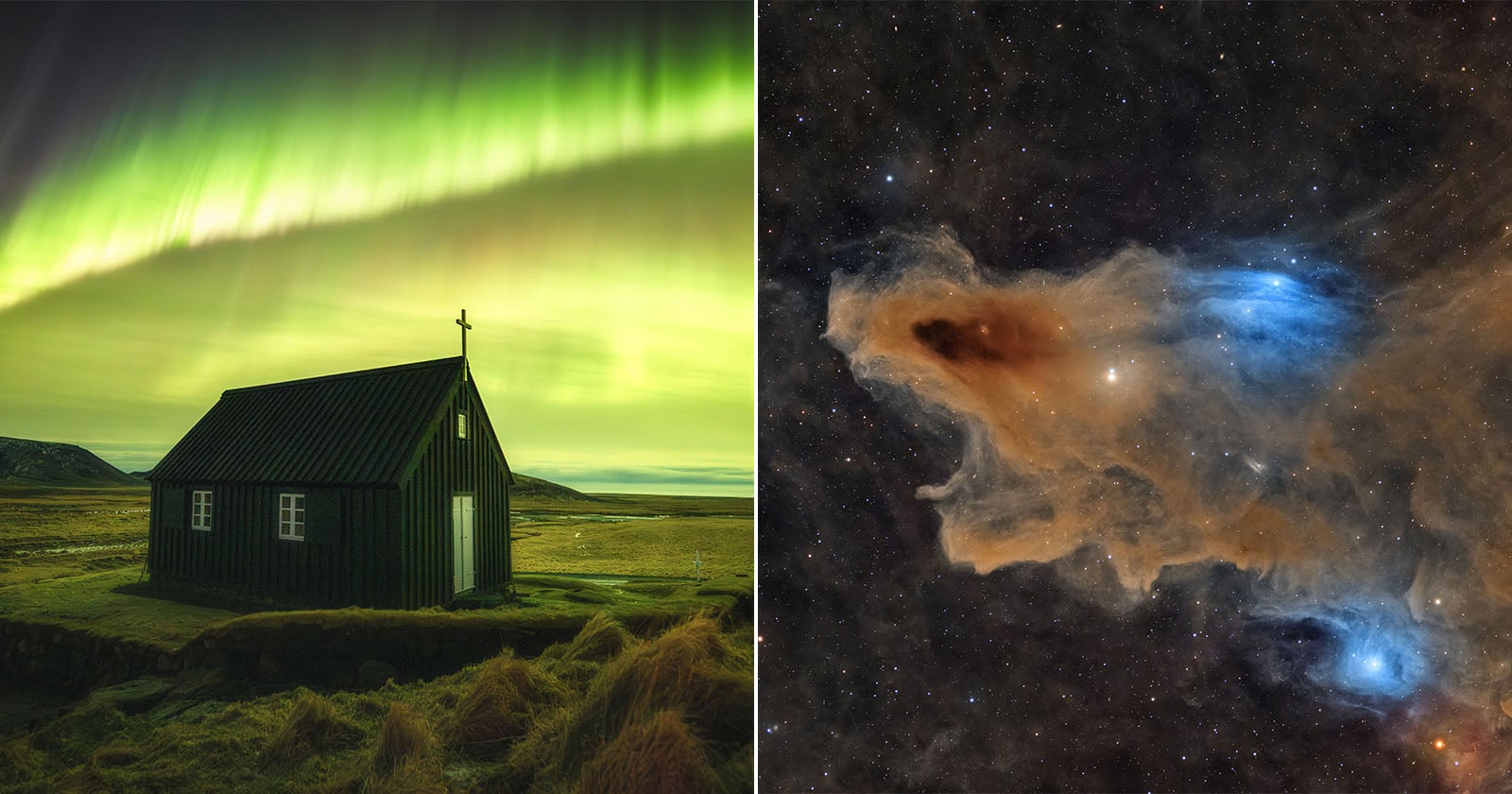
A cosmic predator took the top prize in the 18th ZWO Astronomy Photographer of the Year, the competition run by the Royal Observatory Greenwich. Kuwaiti photographer Ali Alobaidly was named Overall Winner for The Quiet Predator, a deep, finely resolved portrait of the Shark Nebula (LDN 1235) in the constellation Cepheus, about 650 light-years from Earth. The win earned him £10,000, and ZWO founder and CEO Sam Wen pointed out that Alobaidly is the first Overall Winner from Kuwait in the competition’s history.
The image was hard-won. According to Royal Museums Greenwich, Alobaidly camped in the Al Salmy Desert in western Kuwait, rated Bortle class 4.5, on August 21-22, 2025, hauling more than 150kg of astrophotography and camping gear. His rig was two identical Askar 140 APO refractors, each paired with a ZWO ASI2600MM Pro monochrome camera. He collected 28 hours and 30 minutes of light through LRGB filters and merged it into the final colour frame. The nebula is made of interstellar dust, and its blue patches are reflection nebulae, clouds that scatter the light of nearby stars rather than glowing on their own.
Judge Steve Marsh of BBC Sky at Night Magazine said that when the Shark is “resolved to the point where even detail-rich distant galaxies can be seen through it, you know you’re looking at something very special.”
The winning image also took the Stars & Nebulae category. The other category winners were:
- Aurorae – Radoslav Sviretsov, The Crown
- Our Moon – Petr Horalek, Venusian Pearl on the Moon
- Our Sun – Miguel Claro, Active Region 4122
- People and Space – Max Inwood, A Message from the Ancients
- Planets, Comets, and Asteroids – Tom Williams, Saturnian Equinox
- Skyscapes – Stefano Pellegrini, Botswana Star Trail
- Galaxies – 智鹏 严 & Xinran Li, NGC 4753: A Symphony of Dust Lanes in Virgo
Tom Williams had an especially strong year. Besides his Saturn win, he was runner-up in the same category with The Uranian System and was Highly Commended in Our Moon for Pythagoras Crater.
The ZWO Young Astronomy Photographer of the Year title went to 15-year-old Nikolaos Strimpoulis from Greece for Mineral Moon. Haocheng Zhu received the Sir Patrick Moore Prize for Best Newcomer for M1: Echoes of an Ancient Explosion, and Paweł Paweł won the Annie Maunder Open Category with Reverse Astronomy: Mother.
The prize money went beyond the headline award. Category winners and the young winner each received £1,500, runners-up £500, Highly Commended entries £250 and special prize winners £750. Royal Observatory Greenwich astronomer Dr. Greg Brown said the entrants’ skill and innovation mean “there is always a wealth of new sights to be seen even in targets that have been observed many times over.”
The winning images went on show in an exhibition at the National Maritime Museum in London, which opened on September 18, 2026.