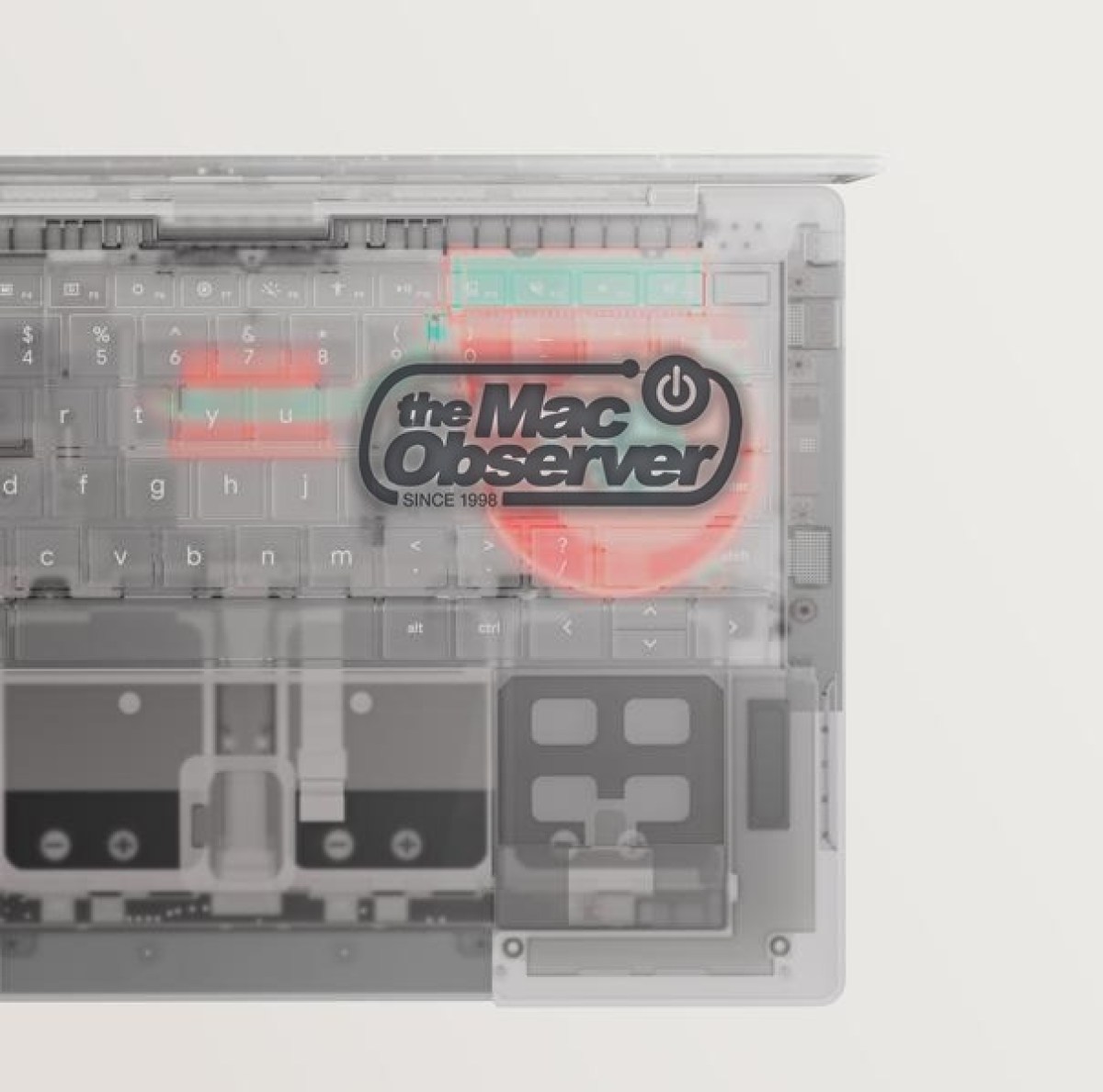
Google’s Googlebook project is about to stop being a concept slide. Pre-orders for the first devices open on September 21 at 9 a.m. ET, yet none of the five hardware partners had officially shown its machine as of September 19, 2026. Leaked renders of the Asus Googlebook, obtained by The Mac Observer, now give the clearest look so far at what one of these laptops will be like.
Some background first. Google introduced Googlebook on May 12, 2026 as a new premium laptop category built around Android and Gemini. It merges Android with ChromeOS, the software behind Chromebooks. Acer, ASUS, Dell, HP and Lenovo signed on as launch partners, and Google promised devices in fall 2026. The main software feature is Magic Pointer, which puts Gemini directly into the cursor so it can make suggestions based on whatever you point at. Google also named one design element that every Googlebook will share: a “glowbar”.
Two design details every Googlebook seems to share
The Asus model uses a familiar clamshell shape and is set apart by two details:
- A dedicated “G” key in the spot where a Windows laptop has its Start key and a Mac has Command.
- An RGB light bar on the lid, which appears to be Google’s glowbar in its Asus form.
Based on what has leaked so far, both details are expected on every Googlebook, whoever builds it. That gives the category a recognisable look, much like the Chromebook Pixel once had.
Ports, not dongles
The side views are good news for anyone who is tired of carrying adapters. The Asus Googlebook has at least two USB-C ports and two USB-A ports, plus a 3.5mm audio jack. That is a more generous selection than many thin premium laptops offer. The renders also show a very large touchpad, a fingerprint sensor, a keyboard with reasonable key travel, and a display that reaches close to the corners of the lid.
A fan inside
The biggest surprise is under the keyboard. This Asus Googlebook appears to use active cooling: a cutaway shows a fan under the right side of the keyboard, with a heat pipe running toward the middle of the chassis. A fan is unusual in a machine descended from the Chromebook. It suggests that Asus is aiming this configuration at heavier workloads, and it is possible that other versions will come with or without a fan. Google has said Googlebooks will use Intel, Qualcomm and MediaTek chips, but the leak does not show which processor this unit uses.
What’s still missing
Asus has not published official specs, prices or regional availability for its Googlebook, and Google has not said which partner models will be ready when pre-orders open. Those details are expected on September 21. Until then, these renders are the most complete look at a real Googlebook, and they suggest Google and its partners want these laptops to compete with premium machines.