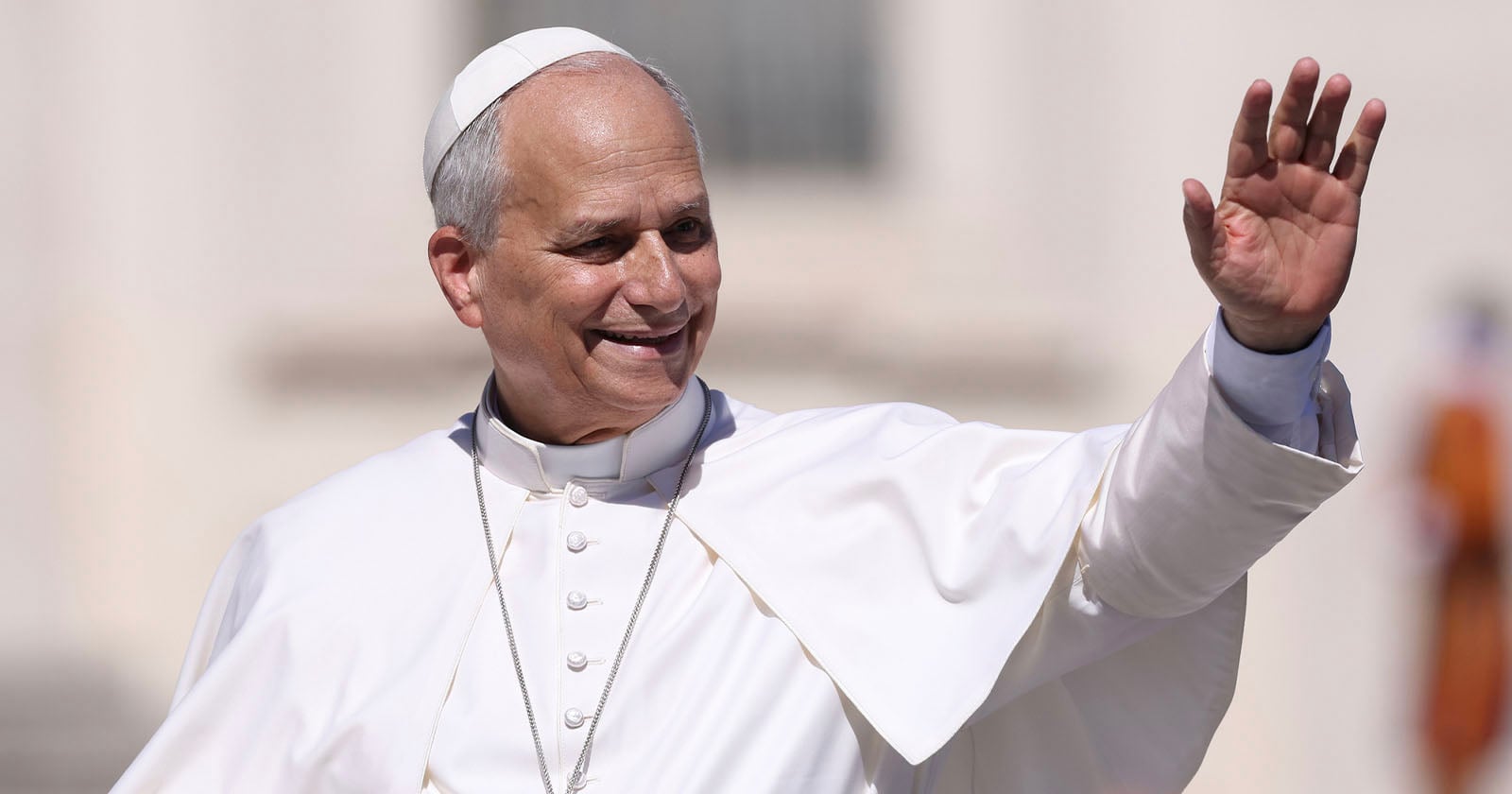
Image generators can produce a passable oil painting or a photorealistic portrait in seconds, but according to Pope Leo XIV that output is not art. It isn’t simply weaker art either. It is a different kind of thing altogether. The pontiff made the case on Friday, October 2, 2026, in an address to artists and curators in the Vatican’s Consistory Hall at a meeting titled “The Art of Possibility: Weaving Together”, organised by the Dicastery for Culture and Education.
“In this age of artificial intelligence, we urgently need to distinguish human art from what is produced by machines,” the Pope told the gathering. He then went further than an argument about taste: “There is an ontological difference — even before an aesthetic one — between art and what a machine can generate through statistical calculation based on millions of images created by others. Algorithms lack the spark of the human, whereas authentic culture and art preserve this spark.”
The key word is “ontological”. It concerns the nature of being, not how good something looks. In plain terms, Leo XIV argued that it doesn’t matter how convincing a generated image is. A model that recombines patterns statistically from other people’s work has no intention, no experience and no creativity of its own, and that sets its output apart from a work made by a person. His remark that the training material consists of “millions of images created by others” also touches a nerve for many photographers and illustrators who have seen their portfolios swept into training datasets.
The Pope also addressed the room directly: “The Church needs you. This is especially true in this age of artificial intelligence.” He framed the meeting as part of a wider effort, saying the Church wants to renew an alliance with artists and cultural institutions, which he described as an alliance for safeguarding what is human. In a post on X from the @Pontifex account the same day, he repeated the central argument in condensed form, concluding that “Algorithms lack the spark of humanity.”
The speech fits a consistent pattern. Leo XIV has made artificial intelligence one of the defining themes of his pontificate. His first encyclical, Magnifica humanitas, was published on May 25, 2026 and focused on safeguarding the human person in the age of AI. An encyclical is the highest form of papal teaching, and this one called AI a “powerful amplifier” of disinformation.
- On manipulation: “The ability to manipulate content, images and videos exposes people to biased or misleading perspectives,” the encyclical states, adding that the problem has “both cultural and moral dimensions.”
- On algorithms: “Living amid incessant flows of information, opinions and images, we know how easy it can be to influence decisions and preferences through increasingly sophisticated algorithms.”
- The call: readers were urged to “remain faithful to the truth!”
For the photo and creative industries, the October 2 address is not regulation. Nothing in it binds software makers, stock agencies or camera companies. Its weight is cultural. One of the world’s oldest patrons of the visual arts is drawing a philosophical line between images made by people and images computed by models. It is doing so while platforms, contests and clients are still working out how to label and value AI-generated work.