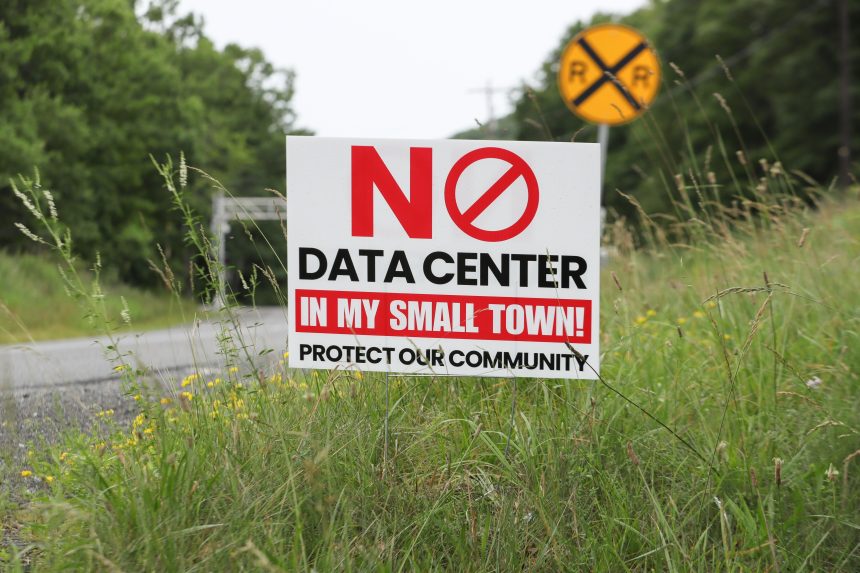
The AI boom needs somewhere to live, and increasingly that means colossal data centers sprouting up next to towns that never asked for them. The pushback, it turns out, started long before ChatGPT made “compute” a household anxiety.
Rewind to 2015. Apple announced plans for a roughly $1 billion data center in Athenry, a quiet town in Ireland. The facility would sit on a 500-acre site and power Apple’s European services, including iTunes, iMessage, and Siri. On paper, it was a jobs-and-investment story. In practice, a small group of protesters dug in — and their objections dragged the project through years of legal challenges before it was ultimately abandoned.
That fight now reads like a preview. A decade later, the same drama is playing out across communities everywhere, only louder and with far higher stakes. The insatiable power demands of AI training and inference have turned data centers from invisible back-office infrastructure into a front-yard political issue.
The image says it all: a hand-painted opposition sign staked into the grass along Route 54 in Mount Carmel Township, Northumberland County. It’s the kind of grassroots resistance that doesn’t make earnings calls but can quietly derail a multibillion-dollar buildout.
Why the anger? A few recurring themes surface wherever these projects land:
- Power grids under strain. Modern AI campuses can draw as much electricity as small cities, raising fears about reliability and rising bills for existing residents.
- Water and cooling. Keeping racks of accelerators from cooking themselves requires enormous cooling capacity, often in regions already worried about supply.
- Land and noise. Hundred-acre footprints and the constant hum of industrial cooling don’t blend gracefully into rural or suburban settings.
What’s changed since Athenry is scale and speed. The competition to deploy AI infrastructure has compressed timelines that used to unfold over years into aggressive, back-to-back announcements. Hyperscalers want capacity yesterday, and that urgency is colliding head-on with local zoning boards, environmental reviews, and residents who suddenly have a strong opinion about what “the cloud” physically looks like.
The result is an emerging movement — part environmental, part economic, part simply territorial — that has organized into protest groups, legislative proposals, and community efforts to block projects outright. It’s the messy, unglamorous flip side of the AI gold rush: every impressive model demo depends on a physical building somewhere, and that building has neighbors.
For the tech industry, the lesson from a single Irish town is aging remarkably well. You can announce the investment, tout the jobs, and promise the future all you like. But if the people living next door aren’t convinced, a yard sign can be more durable than a data center. The fight, as the phrase goes, is only just beginning.