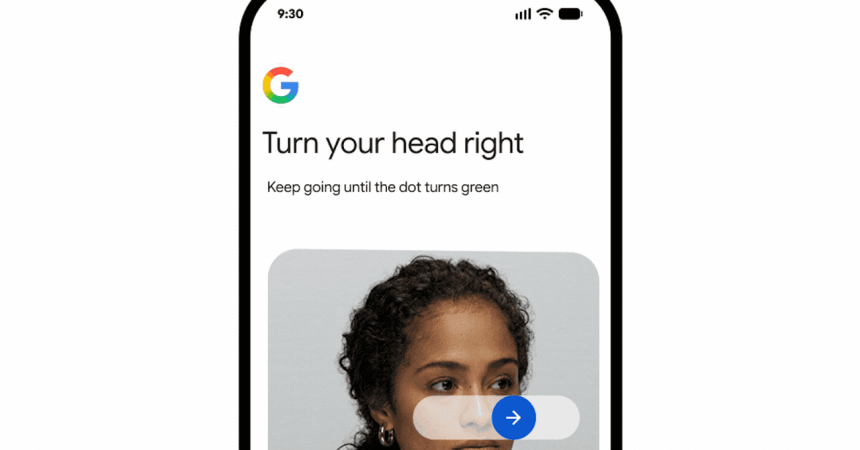
Getting locked out of a Google account is a special kind of misery — the sort where your email, calendar, photos and half your digital identity vanish behind a wall you built yourself. Google’s newest recovery option tries to soften that blow: a selfie video that acts as a spare key hidden in the bushes, ready for the day your device — and your passkey with it — disappears.
The idea is deliberately narrow. This isn’t a flashy new way to log in every morning; it’s an emergency route for the moments when everything else fails. “Selfie is just the newest option in that list available for users,” says Claire Forszt, a Google product manager focused on identity and engagement. “It’s designed to help specifically in these vulnerable scenarios around not having access to the device where your passkey might be.” It sits alongside existing fallbacks such as recovery contacts and backup codes.
Setup takes about five minutes. Head to your Google account, open the Security & sign-in tab, then scroll to the How you sign in to Google section. If the feature has reached your account — Google is rolling it out globally to most accounts — it appears at the bottom as a new option.
Recording the video is refreshingly quick. Google recommends standard lighting, eyes on the camera, and crucially, only one face in frame — even a family portrait hanging on the wall behind you will get flagged. The flow prompts you to lift your chin slowly, glance at the ceiling, then return to center and stare straight down the lens for a final capture. The clip is then verified and stored under Security Settings.
To fend off deepfakes, Google leans on liveness detection and broader risk analysis. “There might be instances where passing a selfie video alone may not always be sufficient to get you back into your account if we suspect something risky going on,” Forszt notes. “We evaluate the overall risk based on many factors.” One catch worth underlining: you have to set this up before you get locked out. Per Google’s support page, you can’t add a selfie video mid-recovery.
Privacy is where Google draws a line that recent rivals didn’t. During setup, an optional checkbox lets you decide whether your recording feeds Google’s facial recognition, age estimation and other verification research — the Improve Google services toggle you can revisit later. That opt-in stance stands in sharp contrast to Meta, which in early July automatically enrolled adult Instagram users into AI remixes of their photos, sparking backlash so fierce the feature was pulled within three days.
There’s an obvious unease in handing over a recording of your face, and not everyone will bite. But an emergency key you can leave switched off is a very different proposition from one forced on you. For the chronically locked-out among us, swiping a face card to claw back into an account may prove exactly the relief it sounds like.