Something curious is happening in American car dealerships this summer. While European buyers are stampeding toward battery-electric vehicles — BEV sales jumped more than 33 percent across the first half of 2026 — Americans are reaching for a different solution entirely: the humble hybrid.
The backdrop is the same on both continents. The ongoing conflict in the Strait of Hormuz has sent oil prices lurching, and US gas prices now sit roughly 30 percent higher than they were a year ago. But where that pain pushed Europeans to consider going fully electric, in the States it’s translated into a hybrid boom. Kelley Blue Book projects hybrid sales to climb 9 percent this year, even as overall car sales are expected to slip by more than 2 percent.
Pure EVs, meanwhile, are stuck in the slow lane. Electric sales rose nearly 15 percent in Q2 versus Q1, but the raw numbers remain modest — well below earlier optimistic forecasts. That’s largely down to the Trump administration reversing federal support, including tax credits worth up to $7,500, prompting automakers to quietly walk back their electric ambitions.
So why hybrids? A few reasons stack up neatly:
- No range anxiety. A hybrid behaves like a normal gas car — you just fill it up and go.
- Familiarity. As analyst Stephanie Brinley of Mobility Global puts it, “A hybrid doesn’t feel like an electric vehicle — these are very different animals.”
- Small price premium. On many models, the mixed powertrain adds only a few thousand dollars to the sticker.
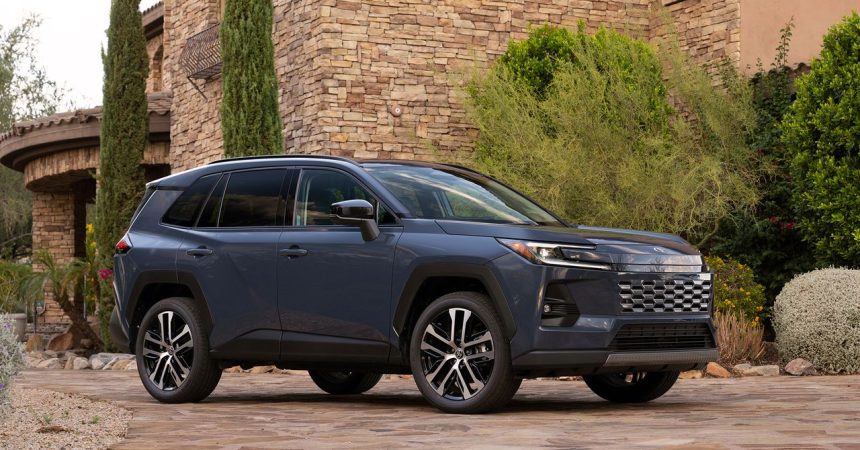
The single biggest driver of the trend is Toyota. Having bet on hybrid tech back in the late 1990s with the Prius, then rolling it into the Camry by the early 2000s, the company kept faith while rivals sprinted toward pure electrics. Today you can buy a hybrid version of nearly every car in its lineup — and popular models like the Camry and RAV4 are now hybrid-only. This quarter, Toyota’s hybrid sales climbed nearly 20 percent.
“You have people who have been buying RAV4s for 20 years, and they literally don’t know what a hybrid is, but they go into a dealership and buy a new one,” says Karl Brauer of iSeeCars.com.
The ripple effects are everywhere. Honda’s CR-V hybrid trims accounted for 51 percent of that model’s sales, and the company confirmed it will discontinue its Prologue EV in the US for the 2027 model year — leaving it with zero BEVs in North America. Hyundai and Kia both posted hybrid gains. Even reluctant converts like GM now say they’ll lean on hybrids to survive the “messy middle” of the electric transition, while Ford’s Maverick hybrid has been a genuine hit.
Perhaps most telling: Edmunds found that more than 20 percent of Tesla owners who traded in during Q2 bought a hybrid. Yet Brinley reads the trend optimistically for EVs too. “Hybrids showed up more than 25 years ago, and now they’re reaching 15 percent of the market,” she notes — a crack in the armor that may make electric adoption easier down the road.