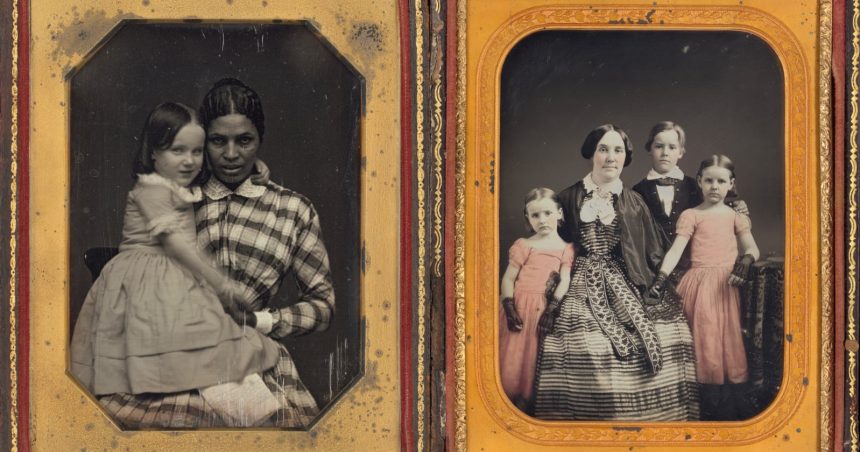
Before Instagram filters and 200-megapixel phone cameras, there was the daguerreotype — a mirror-polished sheet of silver-coated copper that captured a single, unrepeatable image. And in the 1840s and 1850s, a handful of African American photographers turned that fragile, painstaking technology into a tool for self-definition. That story is the backbone of Remember Me: Picturing African Americans in Early Photography, an exhibition heading to the National Gallery of Art in Washington.
The show gathers roughly 70 works from the Gallery’s own collection, arranged chronologically across three thematic sections. It’s a technical history as much as a social one, tracing photography from its earliest American days into the studio era of the early 20th century.
The first section, “Black Entrepreneurs,” spotlights James Presley Ball, Glenalvin Goodridge, and Augustus Washington — three pioneers who opened thriving portrait studios soon after the medium arrived in the United States. They photographed both Black and white clients around the Civil War era, and, unusually for daguerreotypists, they signed their work. That signature was more than a flourish: it staked a claim to authorship and put Black entrepreneurship on the record. Among the surprises here is Goodridge’s Portrait of a Cat from around 1858 — proof that pet portraiture is older than you’d think.
The middle section, “Portraits,” turns to images made in largely white-owned studios before and after the Civil War. These pictures cut both ways — reinforcing stereotypes in some cases, disrupting them in others. Portraits of free and enslaved men, women, and children lay bare the fraught questions of agency and consent that shadowed the medium in its early decades.
The final section, “Studios,” follows the rise of Black-owned photography businesses in the late 19th and early 20th centuries. It features celebrated names like Addison Scurlock and James Van Der Zee alongside lesser-known talents such as G. Addison Turner and Daniel Freeman. Later works, including a 1918 Portrait of Red Cross Nurses, show the medium maturing into a professionalized craft.
Taken together, the images document how Black Americans used photography to record their lives, shape their public image, and preserve their histories. It’s a reminder that every new imaging technology — from the silver plate to the smartphone sensor — becomes, sooner or later, a mirror people hold up to themselves.
Remember Me: Picturing African Americans in Early Photography will be on view at the National Gallery of Art in Washington from November 7, 2026, to March 14, 2027.