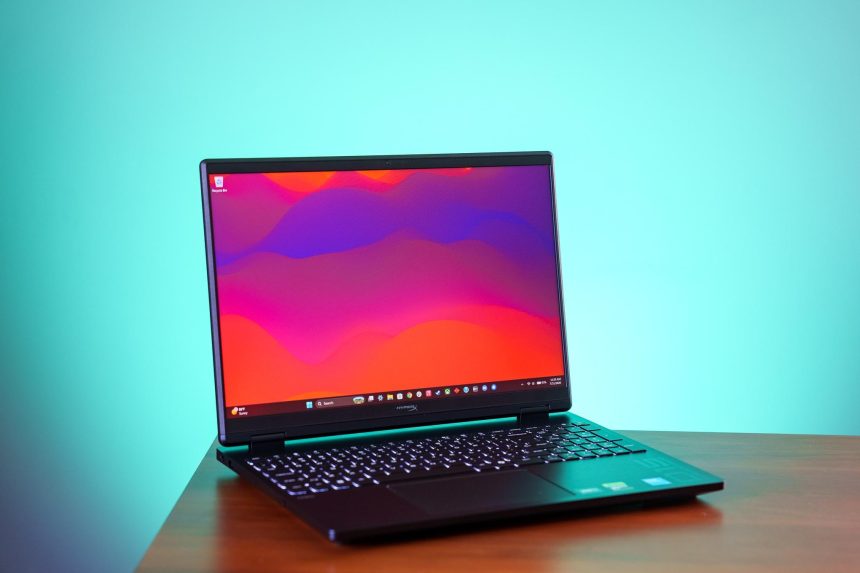
Remember when a capable gaming laptop cost you $800? HP does too, and it’s quietly moving on. The HyperX Omen 15, shown off at CES 2026 back in January, steps in to replace the long-running Victus 15 — a machine that made entry-level gaming genuinely accessible. The successor is a better laptop in almost every measurable way. It’s just no longer the bargain that made its predecessor a bestseller.
Let’s start with the good news, because there’s plenty of it. The Omen 15 packs an NVIDIA GeForce RTX 5050 Laptop GPU at its base, enough to run 2026’s newest titles — though you’ll be dialing settings down toward the lower end to keep frames flowing. Want more headroom? Configurations scale up through the RTX 5060 to the RTX 5070, the latter carrying 8 GB of GDDR7 VRAM. On the processor side, HP offers everything from the older Core i5-14450HX up to Intel’s Core Ultra 9 386H, so there’s flexibility for both penny-pinchers and power users.
The display got real attention this generation. Where the Victus made compromises, the Omen 15 offers a brighter panel with a taller 16:10 aspect ratio and a higher refresh rate. Splurge on the top-tier screen and you get a 2.8K OLED with 120 Hz VRR and 1,100 nits of HDR brightness — the kind of spec sheet that would have felt fantastical on a budget machine a couple of years ago.
The rest rounds out nicely. There’s up to 32 GB of DDR5-5600 MT/s memory, a 1 TB PCIe Gen 5 SSD for storage that keeps pace with the silicon, and — small but appreciated — a 1080p webcam that finally makes this thing usable for video calls and streaming, not just fragging.
So what’s the catch? Price. Thanks to what the industry has taken to calling “RAMageddon” — the ongoing memory-price crunch squeezing everyone this year — the Omen 15 starts at US$1,200. That’s a substantial jump from the $800 that made the Victus such an easy recommendation. Step up to an RTX 5070 configuration and you’re looking at US$2,099.99, comfortably into premium gaming-laptop territory.
It’s a strange spot to be in. Everything HP added is worth having, and none of it is padding — the OLED option alone justifies a chunk of the increase. But the Omen 15’s real identity crisis is positional. It arrived to fill the shoes of a machine defined by affordability, and it can’t quite deliver on that promise in the current market. Call it a working-class gaming laptop that got a pay cut on its way up the ladder. Available now, it’s a genuinely good machine wearing a price tag its predecessor’s fans won’t recognize.