Live video work is a contact sport, but rarely quite this literal. Concert videographer Dario Shields says his professional camera kit was damaged after Dancehall artist Elephant Man dragged him across the stage at Dream Weekend’s YUSH event in Montego Bay, Jamaica, on Saturday. Footage of the moment has since gone viral, and Shields is now pursuing legal action.
The clip shows Shields operating a camera rig near the stage when Elephant Man approaches, grabs him and pulls him along the platform. To avoid falling from the elevated stage, Shields bends down and braces himself against a stage monitor — all while still clutching his gear. His lawyers, cited by The Jamaica Gleaner, say he was carrying out his contractual duties when he was pulled across the stage in front of thousands.
The casualties: according to Shields’ legal team, the encounter broke his Sony a7 III camera and a Tamron lens. That’s not trivial. The a7 III remains one of the most popular full-frame hybrid bodies among event shooters, prized for its stabilized 24MP sensor and reliable autofocus in dim, fast-moving venues. Paired with a versatile Tamron zoom, it’s exactly the kind of workhorse rig you’d expect on a big Dancehall show — and exactly the kind you don’t want yanked around on a live platform.
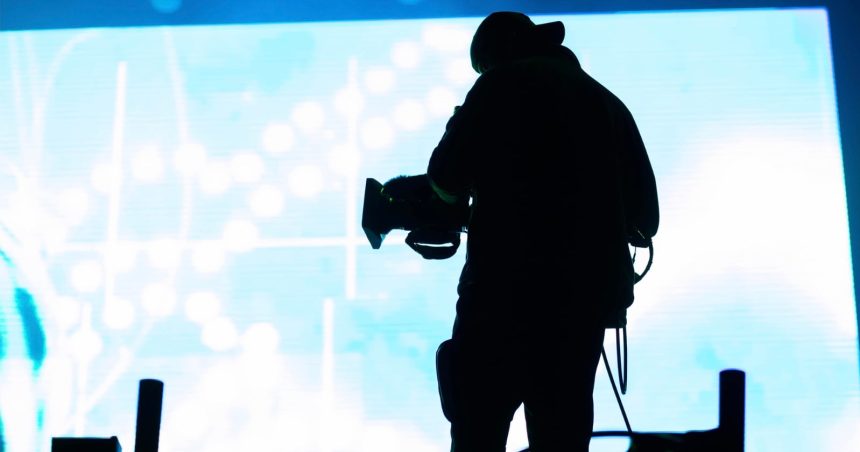
Shields explains that his role goes well beyond documentation. His camera feeds the giant LED screens ringed around the venue, so patrons far from the stage can still see the performers.
“My camera feeds the big screens. Before the artistes come on, I help build the crowd’s energy by putting patrons on the screens. When the performances begin, my job is to capture the artistes so everybody can see them,” he told the Gleaner.
He insists he was out of the way. “He literally came over to where I was, grabbed me and started saying, ‘Move, move, cameraman’, while dragging me,” Shields says. “If I didn’t bend down and hold onto the speaker box, I would have been pushed off the stage. I just continued doing my job.”
Elephant Man has denied assaulting Shields or intentionally disrespecting him, framing the interaction as part of his performance. He later shared a video claiming he had apologized. Shields’ attorneys say no formal apology has arrived and that they intend to proceed with legal action.
Beyond the courtroom drama, the incident is a reminder of how exposed live-event crews really are. Camera operators near a stage are working with heavy, fragile equipment in unpredictable conditions, often within arm’s reach of the very performers they’re filming.
“People don’t always see the work that goes on behind the scenes,” Shields says. “We’re there to make sure the audience has the best experience possible. At the end of the day, I was just doing my job.”