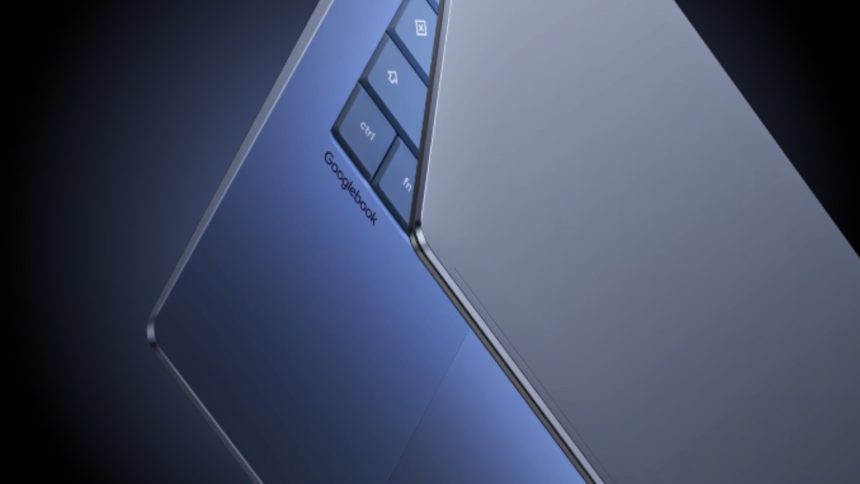
Dell is taking one of its most storied laptop names into brand new territory. The company’s first Googlebook — the machine that finally brings Google’s desktop-flavored Android to a proper premium notebook — carries the XPS 13 badge, and on paper it looks like anything but a compromise.
Officially unveiled on May 12, 2026, the device (model DX13267, known internally by the codename “Mica”) is the clearest sign yet that Dell isn’t treating Google’s laptop platform as an afterthought. Pinning the XPS name on it says the opposite: this is meant to sit at the top of the range.
Under the hood, the XPS 13 leans on Arm. It runs Qualcomm’s 12-core Snapdragon X Elite chip, complete with a 45 TOPS NPU for on-device AI chores — the kind of silicon that has been quietly reshaping thin-and-light laptops over the past couple of years. Google, for its part, is supplying the brains of the operation with a desktop build of Android 17, nicknamed Aluminium OS. Think of it as Android that has finally stopped pretending to be a phone stretched across a bigger screen.
The rest of the sheet reads like a modern flagship ultraportable:
- Display: 13.4-inch OLED touch screen
- Memory: up to 32GB of RAM
- Connectivity: Wi-Fi 7
- Processor: Qualcomm Snapdragon X Elite (12 cores, 45 TOPS NPU)
- OS: Android 17 desktop build (“Aluminium OS”)
There’s a bit of showmanship, too. Among the Googlebook-specific touches is a lid Glow Bar — a small flourish that hints Google wants these machines to feel like a distinct category rather than warmed-over Chromebooks.
The bigger picture is what makes this interesting. For years, Android on large screens has been the platform’s perennial weak spot, a place where good hardware ran into software that never quite fit. An XPS-branded device, powered by capable Arm silicon and a genuine desktop Android build, is a serious statement of intent from both Dell and Google. If Aluminium OS delivers, it could give Windows-on-Arm and ChromeOS alike something new to worry about.
What’s still missing is a price. Dell hasn’t announced how much the XPS 13 Googlebook will cost, so for now the value equation remains an open question. Devices are due to launch in fall 2026 — the machine has not yet reached buyers.
Whether Aluminium OS can carry the weight of the XPS name is the question that matters. But as a first attempt, Dell is clearly not playing it safe: it’s putting one of its best-known brands on the line to find out whether Android is finally ready for the desktop.