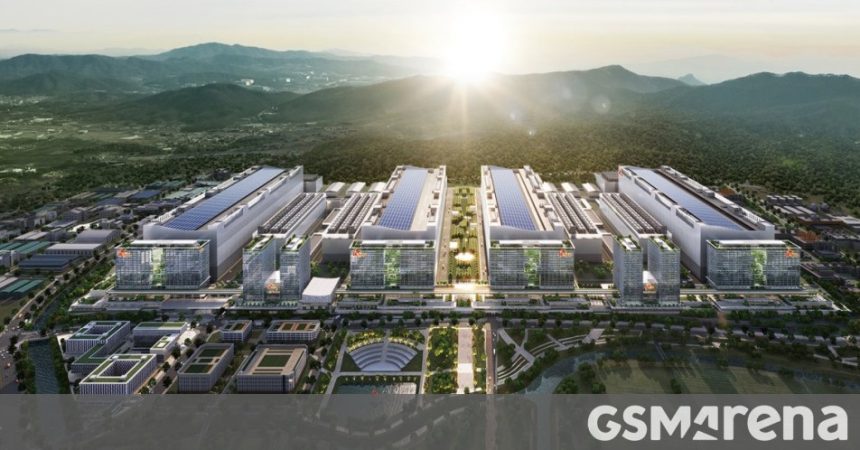
The memory shortage isn’t going anywhere, and SK Hynix has decided to throw serious money at the problem. On August 7, 2026, the company’s board approved a 54 trillion Korean won (US$38.1 billion) plan to build two new memory chip fabs in South Korea — one of the biggest single capacity commitments the industry has seen in this cycle.
The money splits into two distinct projects. The larger slice, 35.2 trillion won, funds a fabrication plant in Yongin known as Y2, which will churn out HBM and other DRAM products. The remaining 19.1 trillion won goes toward the M17 facility in Cheongju, dedicated to NAND storage chips. Between them, these two lines cover the full spread of memory that modern smartphones, GPUs and AI accelerators are starving for.
Here’s the catch, and it’s a big one: these fabs are years away. The Cheongju M17 plant breaks ground in February 2027, with its first cleanroom opening in December 2028. The Yongin Y2 site follows, breaking ground in July 2027 and lighting up its first cleanroom in June 2029. Groundbreaking hasn’t even started yet — right now this is a plan on paper, backed by real capital, but concrete nonetheless.
That timeline matters because the current squeeze is happening now. AI datacenter demand has vacuumed up HBM output, and knock-on effects are rippling through the entire memory market, from DRAM modules to the NAND in your phone. There’s even speculation it could complicate Apple’s iPhone 18 Pro launch. New fabs opening in late 2028 and mid-2029 do nothing to ease shortages in 2026.
Still, it’s a meaningful signal. SK Hynix sits among the three dominant DRAM and NAND makers, and a build-out of this scale tells you where the company expects demand to be heading for the rest of the decade — namely, up and to the right, driven by AI. The emphasis on HBM production at Yongin in particular underscores just how central high-bandwidth memory has become to the datacenter arms race.
For consumers, the honest takeaway is patience. These investments are the right medicine for a structural capacity problem, but medicine that takes two to three years to kick in. If you’re eyeing a memory-hungry upgrade in the near term, expect prices to stay firm. Relief, if it comes from these fabs, arrives closer to the end of the decade.