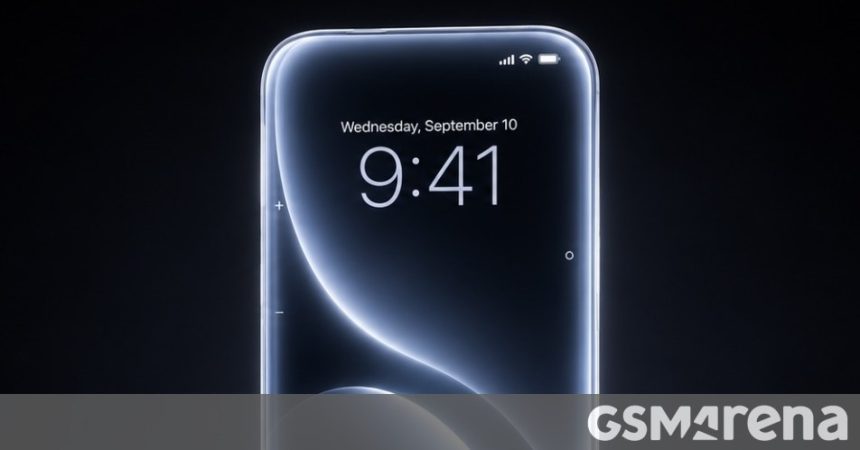
The rumor mill has been running hot on Apple’s plans for a radically redesigned, glass-heavy iPhone to celebrate the handset’s 20th anniversary. Then came a curveball: an analyst claiming the whole project had been scrapped. Now that obituary is being challenged.
The pessimistic take came from Jefferies analyst Edison Lee, who said in August 2026 that Apple had abandoned the all-glass concept because of manufacturing headaches. Turning a phone into a seamless slab of glass is, unsurprisingly, a tough engineering ask — and that difficulty was cited as the reason for pulling the plug.
Bloomberg’s Mark Gurman, however, isn’t buying the cancellation story. Citing people familiar with the matter, Gurman reports that Apple is still planning a glass-centric overhaul of the iPhone to mark the device’s 20th anniversary next year. In other words, the anniversary showpiece remains very much alive as far as his sources are concerned.
According to Gurman, the 2027 flagships — rumored to carry the names iPhone 20 Pro and iPhone 20 Pro Max — are set to spearhead this new design language. The choice of naming itself is a statement: skipping ahead to “20” to line up with the anniversary rather than sticking to the conventional numbering.
It’s worth being clear-eyed about where things stand. Apple hasn’t officially confirmed anything, which means there are no verified specifications, no pricing and no launch date to lean on. What we have instead is a genuine tug-of-war between two credible sources telling opposite stories — one saying the project is dead, the other insisting it’s on track.
Why does an all-glass iPhone matter enough to generate this much noise? A few reasons:
- Symbolism. The original iPhone reshaped the entire industry, so a 20th anniversary model is expected to be more than a routine spec bump.
- Design ambition. A glass-dominant body would be Apple’s boldest structural rethink of the iPhone in years, not just a fresh coat of paint.
- Engineering risk. The same qualities that make such a design striking — transparency, seamlessness, minimal seams — are exactly what make it hard to mass-produce reliably.
That tension is precisely what makes the conflicting reports so plausible on both sides. Manufacturing difficulties are real, and Apple has quietly killed ambitious hardware ideas before. Equally, the company has a long history of pushing through fabrication challenges that looked insurmountable at the concept stage.
For now, the sensible reading is that nothing is settled. Gurman’s sources suggest the anniversary iPhone is still happening; Lee’s sources suggest it isn’t. Until Apple itself steps up to the podium, the all-glass iPhone lives in that familiar limbo between roadmap and rumor — a device everyone wants to see, but no one outside Cupertino can yet confirm.