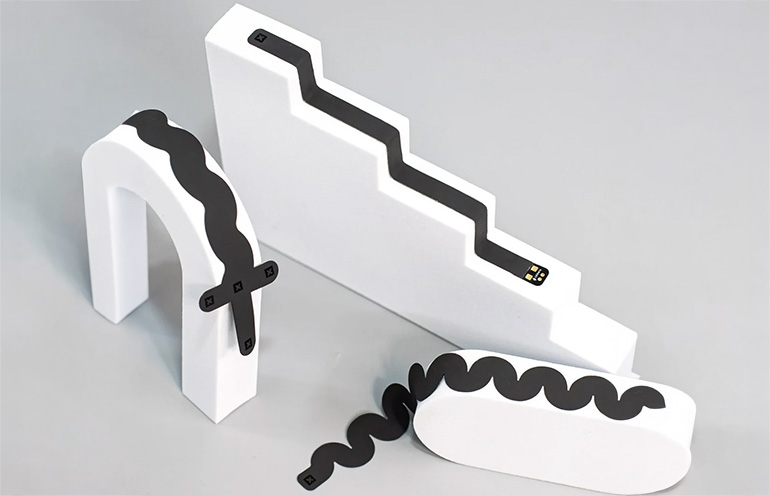
Robots are getting a lot smarter, but most of them still feel nothing when they grab a coffee cup or brush against a human. Uni-Chem wants to change that. This month the company acquired Loomia Technologies to push into the emerging market for electronic skin — flexible, sensor-laden materials that give machines a genuine sense of touch.
It’s a materials play, not a gadget launch. Loomia’s specialty is tactile sensing built into soft, flexible substrates — the kind of technology that lets a robotic hand register pressure, contact and texture. Pair that with a manufacturer that already knows how to mass-produce advanced materials, and you have a plausible path from lab demo to something you could actually wrap around a humanoid’s fingers or forearm.
Uni-Chem isn’t going it alone. The company and fellow automotive supplier R&Y are working with Loomia to develop tactile sensors aimed at both automotive and robotics applications. That dual focus tells you where the money is: humanoid robots grab the headlines, but cars are the volume market. The same sensing layer that helps a robot handle fragile objects can turn a dashboard, door panel or seat into a touch-aware surface.
Beyond electronic skin, the acquisition also positions Uni-Chem in the market for interior materials for smart mobility — the increasingly digital, sensor-rich cabins that next-generation vehicles are being built around. It’s a smart hedge. If the humanoid boom cools, the automotive interior business keeps the technology commercially viable.
Why does electronic skin matter so much right now? Because the current wave of humanoid robots is bottlenecked on manipulation. Vision and locomotion have improved dramatically, but dexterous handling still trips machines up. Without touch feedback, a robot can’t tell whether it’s holding an egg or crushing it. A flexible sensing skin closes that gap, giving control systems the continuous stream of contact data they need to grip, adjust and react in real time.
There’s also a safety angle. Robots increasingly work alongside people, and a body that can detect unexpected contact can pull back before it causes harm. That kind of whole-body awareness is exactly what electronic skin promises — and exactly what factory-floor and consumer-facing robots will need before they’re trusted around humans.
For now, this is business-to-business news rather than something you’ll find on a store shelf. There’s no consumer product, price or launch date attached — Loomia’s technology is a component solution destined for robot builders and automakers, not end users. But it’s a telling signal of where the industry is heading. The companies that supply the invisible layers — the skin, the sensors, the smart surfaces — may end up shaping the robotics era just as much as the flashy humanoids that get all the attention.