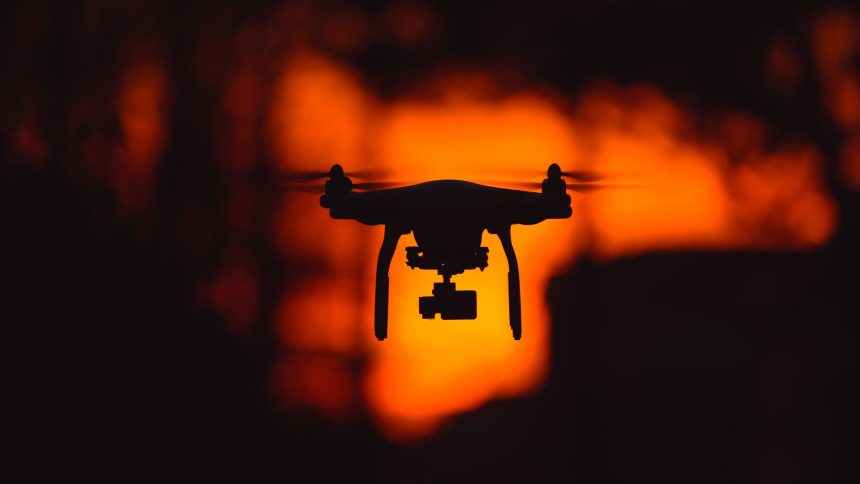
Ubiquiti built its reputation on prosumer networking gear — the kind of long-range wireless bridges and airMAX radios that stitch together warehouses, campuses and remote cameras. Now that same equipment sits at the center of a lawsuit that asks an uncomfortable question: how far does a hardware maker’s responsibility travel with its products?
On August 11, 2026, Ukrainian civilians and relatives of people killed in Russian drone strikes filed suit against Ubiquiti Inc. in the US District Court for the Southern District of New York. The core allegation is stark: the company’s long-range wireless equipment allegedly became the backbone of the command network behind Russia’s drone campaign.
This isn’t a story about a defective gadget or a botched firmware update. It’s about diversion. The complaint argues that commercial-grade radios — designed for legitimate point-to-point links — were repurposed thousands of miles from any authorized point of sale to relay commands and telemetry for attack drones. The legal theory hinges on duty of care: whether a networking company can be held accountable to civilians harmed by hardware that was never meant to leave a data closet, let alone a war zone.
For anyone who follows enterprise wireless, the technical plausibility is the unsettling part. airMAX and Ubiquiti’s radio-bridge antennas are prized precisely because they’re cheap, rugged, and capable of throwing a stable link across long distances with minimal infrastructure. Those same traits — low cost, wide availability, resilience — make them attractive to actors the manufacturer never intended to serve. The very qualities that win over IT departments are the ones now cited in a courtroom.
The case lands in a growing debate over dual-use technology. Radios, drones, GPS modules and off-the-shelf compute have all blurred the line between consumer kit and military hardware. Export controls exist, but enforcement struggles to keep pace with grey-market resellers and shell distributors that move gear across borders long after it leaves the factory.
What makes this filing notable is less the specific hardware than the precedent it seeks. If a court finds that a manufacturer owes a duty of care to strangers harmed by diverted equipment, the implications ripple far beyond Ubiquiti. Router makers, chip vendors and drone-component suppliers would all be watching how liability gets drawn when a product’s end use is entirely outside the maker’s control.
Ubiquiti has not, in the available record, been found to have knowingly supplied anyone in Russia — the suit is about alleged consequences, not proven intent. That distinction will likely define the fight ahead. For now, the case stands as a reminder that in an era of commoditized connectivity, the humble wireless bridge has become geopolitically loaded hardware.
The court has yet to rule, and Ubiquiti’s formal response will shape what comes next.