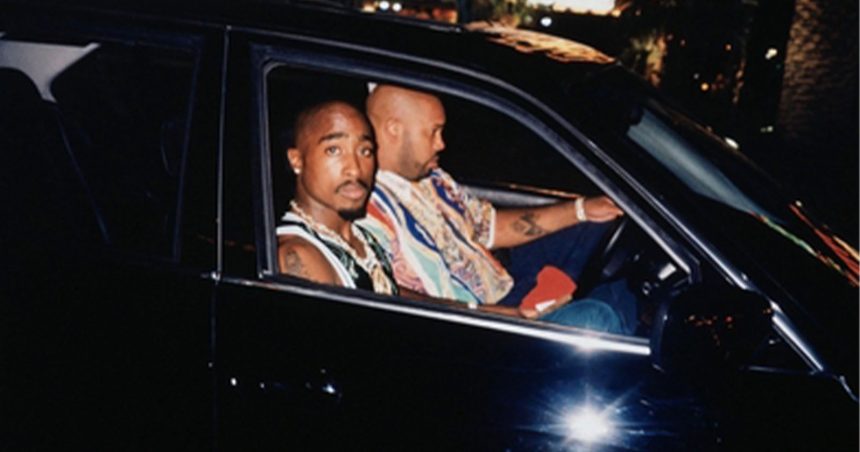
Nearly 30 years on, one image still stops fans of hip-hop cold: Tupac Shakur seated inside a car beside Suge Knight, taken moments before the shooting that would end his life. Now the man who pressed the shutter, photographer Leonard Jefferson, has explained exactly how that frame came to exist — and the humble tool that made it possible.
The instrument in question was a Nikon Nuvis 125i, a compact point-and-shoot built around the APS (Advanced Photo System) film format that Nikon and its rivals championed in the mid-1990s. It was never a flagship. It was the kind of camera you slipped into a jacket pocket and forgot about until a moment demanded capturing — which is precisely why it was on hand.
Jefferson’s photograph was taken on September 7, 1996, in Las Vegas. By his account, barely a minute after the frame was exposed, gunfire erupted. Tupac was struck four times and died of his injuries six days later. The photo, then, is not merely a snapshot of a celebrity in a car — it is a fixed point in time, the last public image of an artist about to become a legend.
What makes the story resonate for anyone who cares about cameras is the sheer ordinariness of the gear. The Nuvis 125i belonged to the APS generation, a format that promised drop-in film loading, multiple aspect ratios and a magnetic data layer that recorded shooting information onto the film itself. APS never dethroned 35mm, and digital soon swept the whole category away. Yet here is a reminder that historic images rarely depend on the most expensive kit in the bag — they depend on being there, and being ready.
Jefferson’s account has resurfaced in the press as of 2026, in part because he was called as a witness in the trial of Duane “Keffe D” Davis in connection with Tupac’s death. That legal context has pulled the photograph — and the photographer — back into public view, decades after the film was developed.
It is worth sitting with the contrast. A pocket film camera, the sort millions of people bought for holidays and birthdays, produced one of the most studied and reproduced images in popular music history. No burst mode, no autofocus wizardry, no post-processing pipeline — just a single exposure onto APS film, captured seconds before everything changed.
For photographers, the lesson is old but never stale: the best camera is the one you have with you. Jefferson had a Nuvis 125i, and that was enough to freeze a moment the world has not been able to look away from since.