Rumors have swirled for months that Panasonic might be walking away from Micro Four Thirds, fueled by a string of lenses that quietly vanished from shelves or became maddeningly hard to find. On August 25, 2026, Panasonic answered those whispers in the most understated way possible: by putting several of those very same lenses back into production.
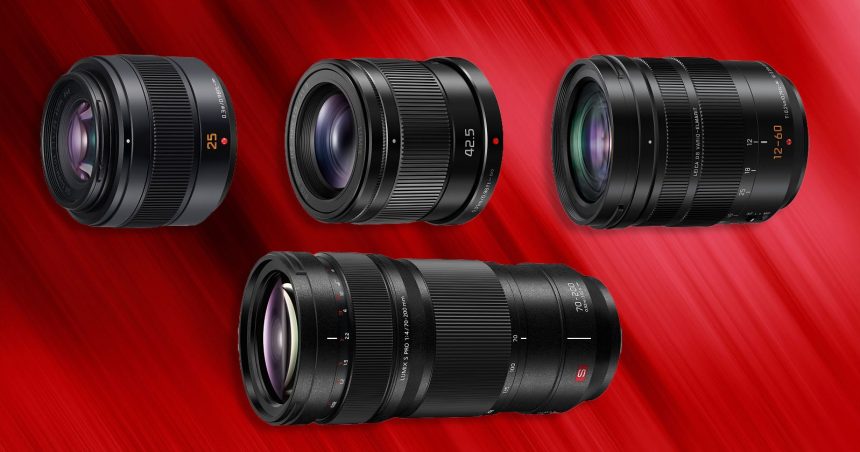
The company refreshed four Lumix optics in total — three for Micro Four Thirds and one for its full-frame L-Mount Lumix S system. The changes are minor on paper, but the message underneath is loud: these lenses aren’t going anywhere.
The trio of Micro Four Thirds lenses getting the treatment:
- Leica DG Summilux 25mm f/1.4 II ASPH. — US$518
- Lumix G 42.5mm f/1.7 ASPH. Power OIS — US$345
- Leica DG Vario-Elmarit 12-60mm f/2.8-4 ASPH. Power OIS — US$860
All three now wear a new fluorine coating on their front elements, which Panasonic says makes the glass easier to wipe clean and more resistant to dust and water. It’s the kind of upgrade you won’t notice on a spec sheet but will appreciate the first time a raindrop beads up and rolls off instead of smearing.
Panasonic also fiddled with the cosmetics — for good reason. On the 25mm f/1.4 II and the 42.5mm f/1.7, the front-ring lettering has shifted from white to a darker gray, a change aimed at cutting reflections during close-up work. The 12-60mm f/2.8-4 goes even further: its front ring loses color entirely, with engraved lettering left unfilled to keep stray reflections out of the frame when you’re shooting up close. Small touches, but this is Panasonic’s favorite normal zoom for the format getting technically — if very marginally — better.
On the full-frame side, the Lumix S Pro 70-200mm f/4 (US$1,599.99) also picks up the fluorine coating on its front element. Same philosophy, bigger sensor.
Each refreshed lens carries a new SKU, tacking an “A” onto the end of its designation — the updated 70-200mm f/4, for instance, is now the S-R70200A. It’s a tidy way to tell the old stock from the new.
Per Panasonic Japan, all four lenses go on sale in mid-September 2026. Whether or not these optics were ever truly discontinued, the practical upshot is the same: they’re back in full production and should stick around for the foreseeable future. For anyone who’s been nervously watching the Micro Four Thirds ecosystem, that’s the real headline hiding behind a coating change and some gray paint.