Photography has never been a men-only affair, but you’d hardly know it from most history books. A new title from ACC Art Books sets out to correct the record. Women Photographers Are Dangerous, published on September 5, 2026, gathers 100 historically significant photographs made by more than 60 women, spanning the medium from the 19th century right up to the present.
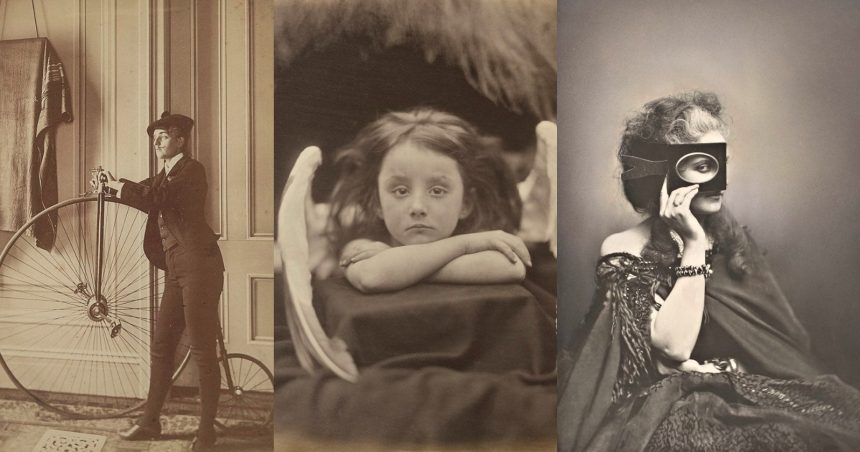
The lineup reads like a who’s who of quietly revolutionary work. There’s Eve Arnold’s intimate portraiture of Marilyn Monroe, and Vivian Maier, the street photographer whose vast body of work only came to light after her death. There’s also Anna Atkins, credited by some historians with producing the first-ever photographic album — using cyanotypes to record dried algae entirely without a camera. Helen Levitt, Julia Margaret Cameron, Dorothea Lange and her iconic Migrant Mother, plus the theatrically self-fashioning Countess of Castiglione, all feature too.
The book’s title isn’t just for shock value. Written and compiled by historians Laure Adler and Clara Bouveresse, the collection foregrounds women who worked in fields that demanded they break rules and put themselves in harm’s way — war zones, political frontlines, feminist activism — alongside those pushing at the edges of art, science, journalism and advertising. One standout image is Frances Benjamin Johnston’s circa-1890 self-portrait, in which she poses with a bicycle wearing men’s clothing and a false moustache: a small act of defiance frozen in an albumen print.
What makes the project compelling for anyone who cares about the medium is how far back it reaches. Women have been involved in photography since Louis Daguerre unveiled the first camera to the world in 1838, working across virtually every genre the technology made possible. The problem was never participation — it was recognition. Time and again, the women in these pages produced landmark work only to be footnoted, misattributed or forgotten entirely.
Technically, the book is a compact object built to be handled and browsed. It runs to 160 pages, measures roughly 10.83 x 1.02 x 8.07 inches and weighs about 1.23 pounds — coffee-table dimensions without the coffee-table bulk. The ISBN-13 is 978-1788843713.
For collectors and casual readers alike, the appeal here is curation. Rather than a single-photographer monograph, Women Photographers Are Dangerous reads as a survey, letting cyanotypes from the 1850s sit alongside Levitt’s 1980 color prints and Lange’s Depression-era documentary work. The result is a portable argument: that the history of photography, told honestly, looks rather different from the version most of us grew up with.
It’s a reminder that some of the most important pictures ever taken came from photographers who were told, in one way or another, that they had no business taking them.