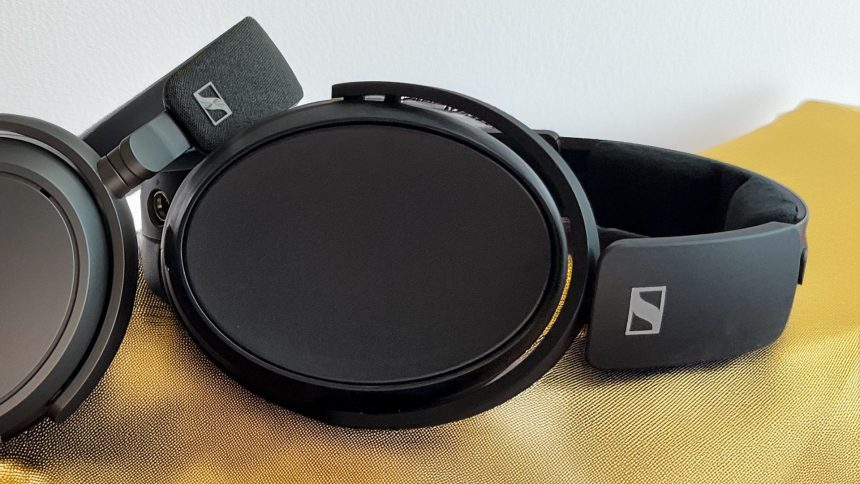
Sennheiser has a habit of dropping studio headphones that quietly become industry staples, and the HD 480 PRO is clearly aimed at that same crowd — though at a price that nudges it out of bargain territory and into serious professional company.
These are closed-back, circumaural studio headphones built around 38mm dynamic drivers housed in a fully sealed chassis. That closed design is the whole point: it clamps down on bleed, which matters when you’re tracking vocals next to a live mic or monitoring on a noisy tour bus rather than in a treated room. Isolation cuts both ways, keeping the outside world out and your mix in.
The headline engineering trick is Sennheiser’s Vibration Attenuation System, which handles damping and decouples the drivers from the rest of the earcup. In plain terms, it’s meant to tame the resonances and rattles that muddy up detail in closed enclosures — the kind of thing that separates a genuine monitoring tool from a pair of consumer cans wearing a lanyard.
In the box, Sennheiser leans into the working-professional angle. You get a set of dedicated recording earpads, a nine-foot coiled cable for freedom of movement without a mess of slack, and a carrying bag for when the studio comes to you. It’s a no-nonsense kit that assumes these headphones will earn their keep.
Now, the sticking point: money. The HD 480 PRO carries a US$399 MAP price across most retailers (that’s £339 in the UK), down from an original MSRP of US$479. That’s well above the semi-pro sweet spot where Sennheiser has traditionally cleaned up, and it puts these into direct conversation with some highly regarded reference cans. At this level, buyers rightly expect the drivers to reveal, not flatter — flaws included.
The HD 480 PRO was unveiled on April 21, 2026, and it’s on sale and readily available now. The question worth asking isn’t whether Sennheiser can build a solid closed-back monitor — it demonstrably can — but whether the HD 480 PRO carves out enough of a personality to justify sitting a full tier above the brand’s own reliable workhorses.
On paper, the recipe is sensible and the accessory bundle is genuinely useful for tracking work. The real test is on the ears: closed-back designs live or die by how well they control that sealed cabinet, and the Vibration Attenuation System is Sennheiser’s bet that it has that problem solved. If it does, US$399 buys a tool. If it doesn’t, it buys a good pair of headphones that happen to cost like a great one.