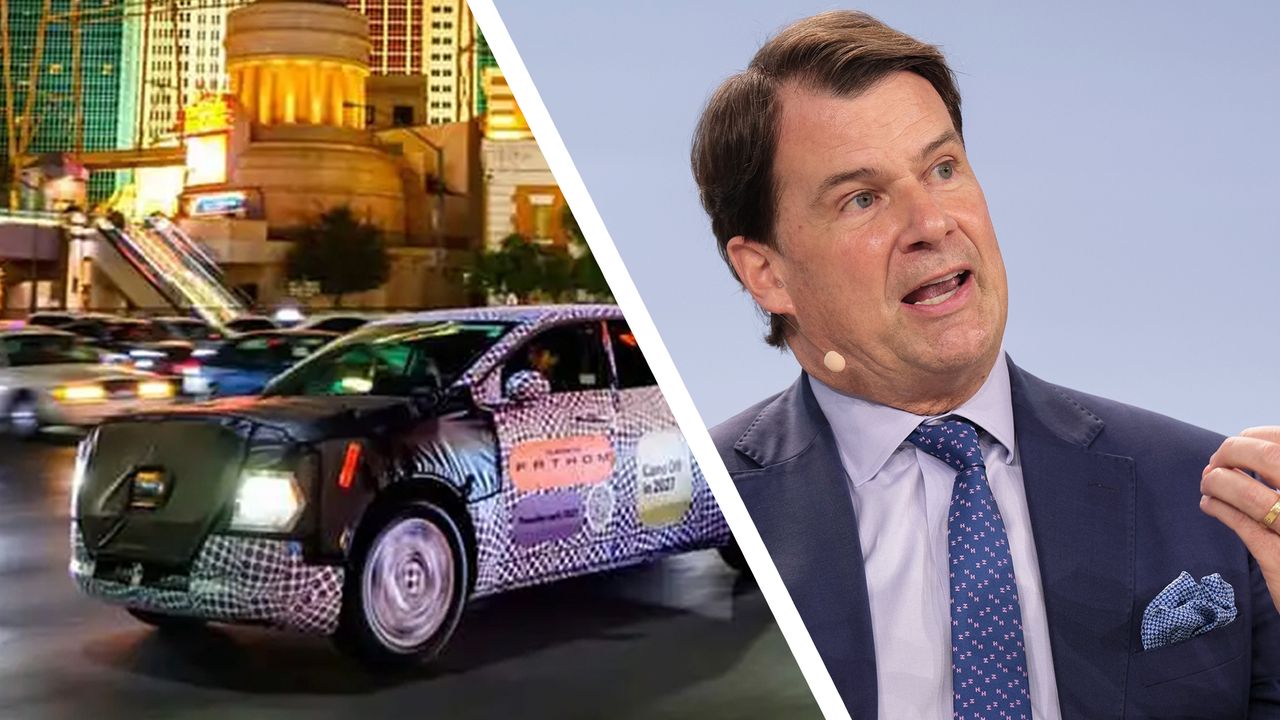
US Transportation Secretary Sean Duffy accused Ford of “actively intertwining its future with Chinese state-backed enterprises” and urged the automaker to cut its reliance on China, prioritise US manufacturing and shore up domestic supply chains. Ford CEO Jim Farley’s reply, given to The Wall Street Journal, was not diplomatic. The letter, he said, reflected “basic misunderstandings, mistruths, whatever words you want to use”.
Farley argued the whole dispute “could have been cleared up with a simple five-minute call”. On the central charge he was blunter: “We’re not enabling the Chinese to come here. Actually, you could argue the opposite is the case.” Asked whether Ford had floated a framework that would let Chinese automakers build in the United States, he answered: “N-O, period. That’s flatly wrong.”
The flashpoint is BlueOval Battery Park Michigan, the plant that licenses cell technology from Chinese battery maker CATL. Ford characterises that as “a limited technology-licensing and services agreement, not a joint venture”, funded with billions of dollars of Ford money and expected to create roughly 1,700 American jobs. The White House’s Rapid Response 47 account, for its part, described Ford as “a GREAT American company”.
The truck behind the argument
All of this matters because of what those cells are meant to power. The Ford Fathom is the first vehicle built on the company’s new Universal Electric Vehicle Platform, and it is the clearest answer Detroit has yet given to cheap electric trucks from Slate and from Chinese brands.
What Ford has confirmed so far:
- Price — starting MSRP of US$28,350, before US$1,595 destination and delivery plus dealer fees
- Battery — a structural LFP pack, paired with a 48-volt electrical architecture using zonal controllers
- Platform — the Universal Electric Vehicle Platform, assembled through the Universal EV Production System in three sections: front clip, rear clip and battery deck
- Packaging — projected to have more passenger volume than a Toyota RAV4, with a front trunk and a bed comparable to the petrol Maverick’s
- Tech — BlueCruise capable for hands-free highway driving, bidirectional power, a large touchscreen with Apple Maps EV routing, Digital Key, and Apple CarPlay and Android Auto as standard
The manufacturing story is the interesting part. Ford replaces 146 stamped body parts with two aluminium “Unicasting” components, and says the wiring harness is more than 4,000 feet shorter and 22 pounds lighter than the one in its first-generation electric SUV. That is how you reach a price like this without a Chinese cost base.
Production is on track to start at Louisville Assembly Plant in the first quarter of 2027, with preorders opening in early 2027 and customer deliveries following later that year. Ford has not published EPA range or power figures, which are expected closer to launch.
Earlier on GismoLand: Slate Truck. Why ditching the testosterone made this EV lovable.