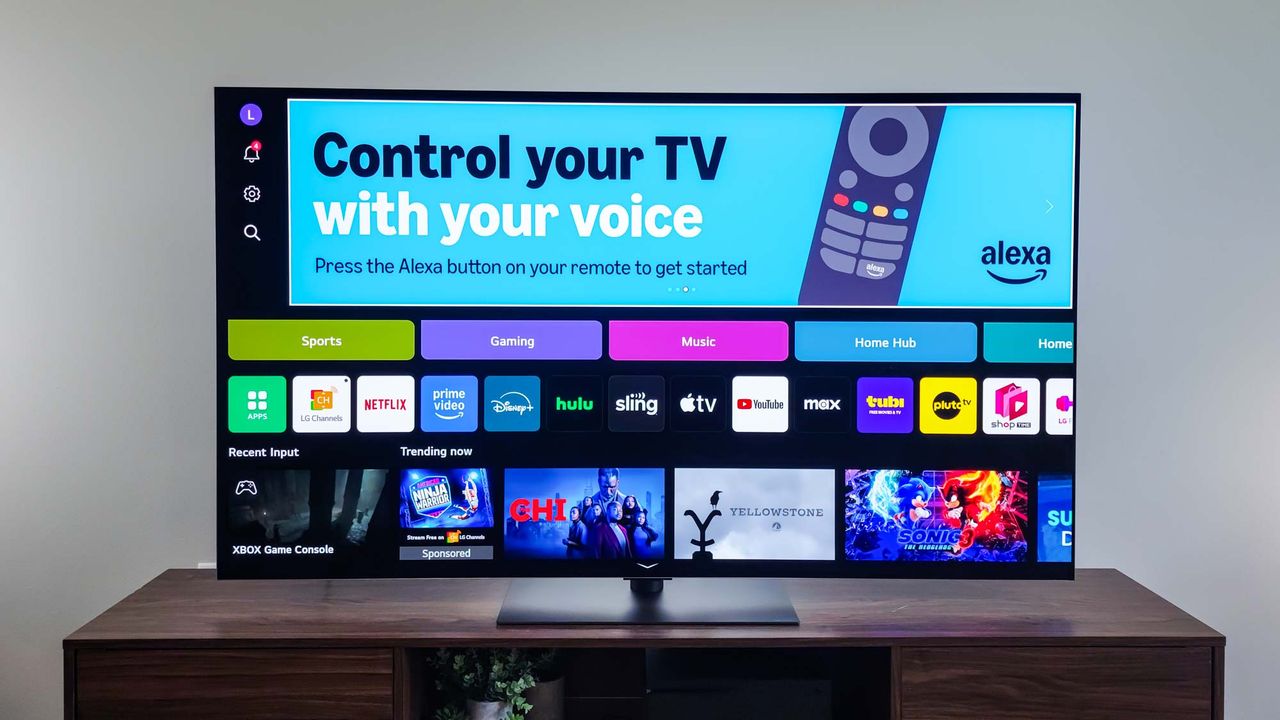
LG has finally said something about the accusation that its televisions listen to living rooms. On September 12, 2026, the company posted a formal statement, Understanding Privacy on LG Smart TVs, to its global newsroom. It is polished, it is quotable, and it is conspicuously narrower than the allegations it is answering.
The trigger was a 135-minute investigation from Gamers Nexus, produced with Level1Techs and independent security researchers, among them Yash Vekaria of UC Davis. Using packet capture and firmware analysis on retail sets, the researchers said LG TVs sample what is on screen, map the local network, and — the headline claim — handle microphone audio in ways an owner would never guess from the setup wizard.
LG’s rebuttal is unambiguous on one point. Its smart TVs, the statement says, "do not continuously record or transmit users’ conversations." Wake-word listening is handled on the set itself: "audio used for wake-word detection is processed locally on the TV and, if no wake word is detected, audio is not converted to text, stored, or transmitted." Speech-to-text, LG adds, "begins only if a user activates a voice interaction through a supported wake-word feature." Speaking to Al Jazeera, the company tied that to two specific triggers — pressing and holding the voice button on the remote, or saying "Hi LG" once Far-Field voice recognition has been switched on — and said the TVs do not collect ambient conversation outside those moments.
LG also insists the commercially interesting features are opt-in: "Features such as Automatic Content Recognition (ACR), voice recognition, and interest-based advertising are optional. These features are not enabled by default." The statement frames all of this around four principles — transparency, user choice, informed consent and continuous improvement — under a Privacy by Design banner. It concedes, sensibly, that "no connected product is ever completely immune from security vulnerabilities."
So what is missing? Roughly everything the researchers actually documented. Their claims included audio captured while the set sat in hibernation, picking up speech up to 40 feet away; transcripts held locally in plain text before being uploaded; recordings retained for 10-15 seconds after a wake word; and network scans harvesting IP addresses, nearby Wi-Fi names and connected devices such as phones and smartwatches. ACR, meanwhile, samples both audio and video to identify what you are watching for advertisers.
The Verge’s reading is that LG "did not address broader concerns about how much data it collects, who it shares it with, the potential for bad actors to exploit its features, or the misleading way in which its privacy options are presented." That is the crux. A denial of continuous recording does not rule out intermittent buffering, and "optional" means little if the consent flow is designed to be clicked through.
The stakes are not small. LG counts 49 million smart TVs in the US and 216 million worldwide, feeding an advertising arm, LG Ad Solutions, that profiles households and the devices in them. A press statement cannot settle this. An independent technical audit could.