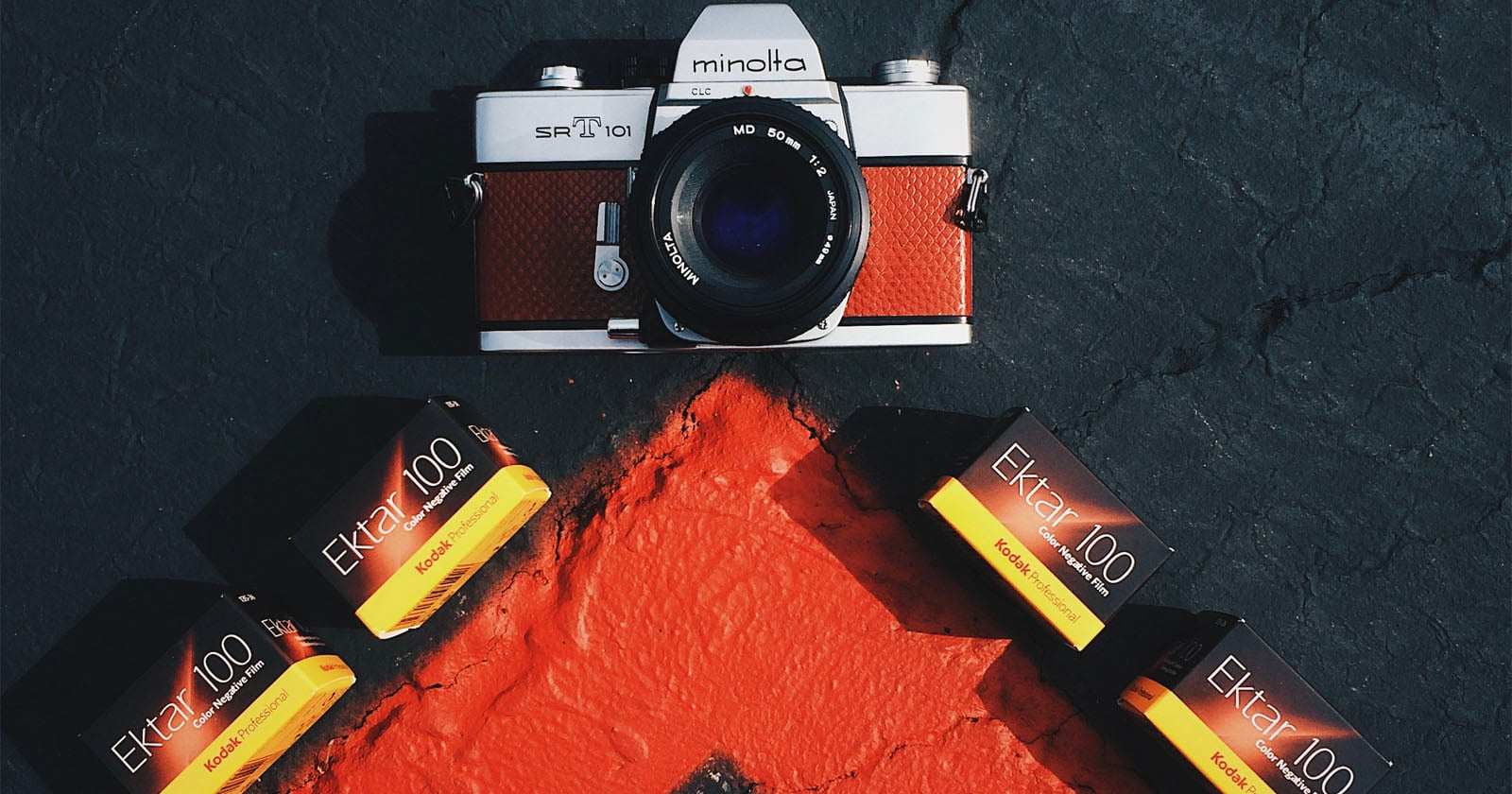
Some films earn a cult following through quirks. Kodak Ektar 100 got there by being very good at a few things: extremely fine grain, punchy saturation and snappy contrast. On September 18, 2026, PetaPixel made it the subject of its Film Friday series, and the piece is a useful reminder of why Ektar and the Portra family remain among the most-used color negative films available.
A name older than the film
The Ektar name goes back much further than the emulsion. Starting in the 1930s, Kodak used it for its highest-quality professional lenses. According to PetaPixel, the name was built by combining Eastman Kodak and TessAR. An Ektar film line arrived later, with stocks such as Ektar 25 and Ektar 1000, and was discontinued in 1997. Rolls of those films still turn up now and then. In September 2008, Kodak announced that Ektar was coming back as Ektar 100. It launched in 135 format only, and 120, 4×5 and 8×10 versions soon followed.
The film also had a job to do in Kodak’s range. PetaPixel notes that it was the film the company told photographers to switch to after Kodachrome was retired, and it became a color negative rival to the rich colors of Fuji Velvia slide film.
What Kodak promises
- Low-speed, daylight-balanced color negative film with a nominal sensitivity of ISO 100/21°
- “Ultra vivid color, exceptional sharpness and enhanced color saturation”
- Billed by Kodak Alaris as “the world’s finest grain color negative film” and “ideal for scanning”
- Formats listed by Kodak: 135-36, 120-5R and 10-sheet 4×5 packs, plus 8×10 sheets in the Kodak Alaris catalog
- Suggested uses: nature, travel, outdoor, fashion, product and commercial photography
Grain you cannot find
PetaPixel calls it the finest-grained film on the market and backs that up with an example. While camera-scanning a couple of sheets of 4×5 Ektar 100, the team zoomed their camera’s magnification all the way in and still could not see any grain to focus on. That fits Kodak’s own claim of extraordinary enlargement capability from a 35mm negative.
Long exposures without much math
Low speed makes Ektar a natural fit for long exposures and pinhole cameras, and its reciprocity behavior is forgiving. Kodak’s data sheet says no correction is needed for exposures up to 1 second, and only a little is needed up to about 10 seconds. At 30 seconds, you should add about one stop, so a metered 30-second exposure really needs about a minute.
The catch
The same saturation that makes a sunset glow can be too much for people. PetaPixel warns that Ektar “can run a bit roughshod with skin tones” and can make faces look overly saturated or ruddy. That is a big reason many portrait photographers pick Portra instead. The review’s sample images span a wide range of gear, including a Fujifilm G617, Hasselblad 500C, Linhof Technika IV, Hasselblad Flexbody, Pentax 67 and Zero Image pinhole camera, and they show where Ektar does best: landscapes, travel and anything with strong color.
Eighteen years after it returned, Ektar 100 is still Kodak’s choice for photographers who want color negative film with a slide-film look and the smallest grain available.