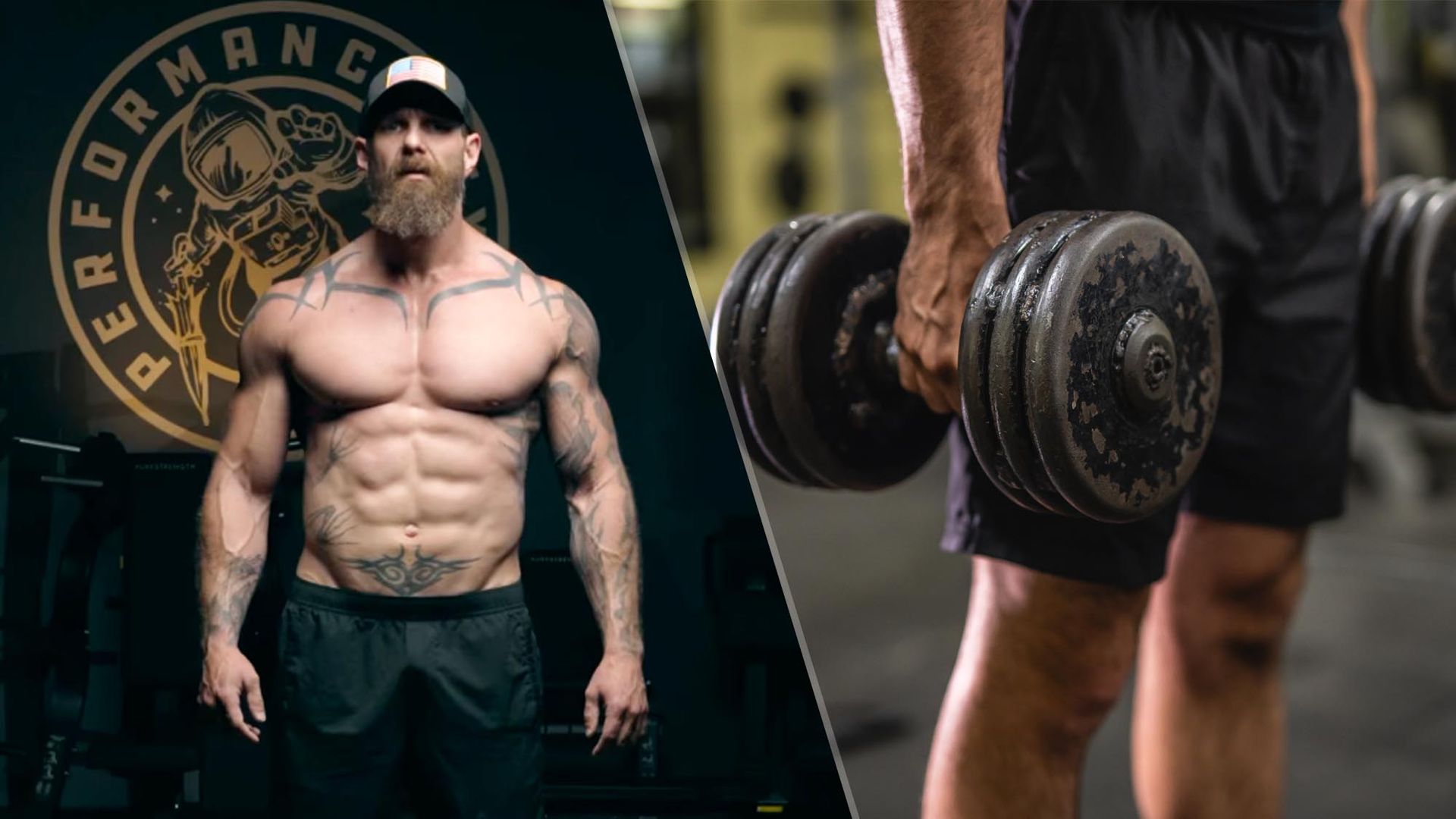
Crunches and sit-ups are nowhere to be seen in the core routine of former Navy SEAL DJ Shipley. At 41, he builds strength and stability with four loaded movements and a single heavy dumbbell. The session was posted on the Instagram account of strength coach Vernon Griffith, and Tom’s Guide broke it down on September 25, 2026. It shows Shipley working his core and lower back from several angles, the lower back being the area traditional ab work tends to skip.
Shipley’s credentials are hard to argue with. According to GBRS Group, the company he co-founded, he enlisted in the U.S. Navy after high school, went through BUD/S (Basic Underwater Demolition / SEAL training), and served at SEAL Team 10 and the Naval Special Warfare Development Group. After 17 years of service he was medically retired in 2019 due to injuries sustained in combat and training. At GBRS Group he is also Chief Training Officer.
The four exercises
- Half-kneeling dumbbell dig and chops: a diagonal lift of the dumbbell across the body
- Half-kneeling dumbbell lateral tilts: side-to-side work from the same locked-in position
- QL-focused hip drops: aimed squarely at the quadratus lumborum
- Suitcase carries: walking with the weight held on one side
Griffith doesn’t prescribe reps. Tom’s Guide suggests starting with 10 reps on each side and running the circuit two to three times for a longer ab and lower-back session. As for the weight, the last few reps should feel challenging but not impossible. If the dumbbell starts to compromise your form, it’s too heavy.
Why it works
The routine builds rotational core strength and hip stability and strengthens the lower back. More importantly, it trains the core, hips and lower back to stabilize the spine under uneven or dynamic loads, which crunches don’t do. The main targets are the deep stabilizers: the quadratus lumborum (QL), a deep muscle that runs from the pelvis to the lower ribs, plus the obliques and the gluteus medius.
The half-kneeling stance in the first two moves does a lot of the work. It locks the pelvis in place, so you can’t borrow momentum from your legs to swing the dumbbell, and the obliques have to drive the weight along the diagonal on their own.
The hip drops go after the QL, a muscle that often ends up tight, overworked or weak in people who spend long hours sitting. Training it through its full range of motion helps reduce lower-back stiffness, which may appeal to anyone who spends the day at a desk in front of a monitor.
Suitcase carries finish the circuit with functional strength for everyday jobs: hauling a heavy suitcase, a bag of groceries or a child on one hip. With the load on one side only, the core muscles on the opposite side have to contract to stop the torso from tilting.
One caveat is worth repeating. If you’re a complete beginner, pregnant or postpartum, or recovering from a specific injury, this workout may not be right for you. If you’re unsure, get personalized advice from a qualified professional first.