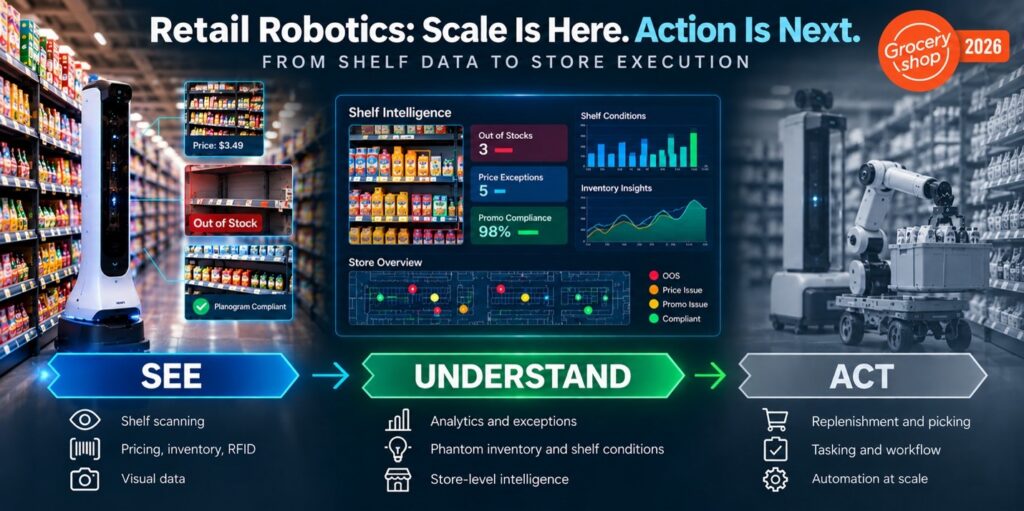
Shelf-scanning robots used to be the curiosity at grocery trade shows. At Groceryshop 2026, held September 22-24, 2026 in Las Vegas, they looked more like settled infrastructure. The interesting question has moved on from whether a robot can roll down an aisle and photograph the shelves. What matters now is what retailers do with that data, and whether robots can start handling the products themselves.
That was the main takeaway from an October 9, 2026 report in The Robot Report by Georges Mirza, who has spent more than a decade bringing robots into retail stores. His tour of the show floor suggests the industry has got past its early concerns about putting machines next to shoppers. The work now is making shelf data actionable.
Simbe Robotics: scale first
Simbe was the clearest example of scale. According to the report, the company has completed the rollout of 3,000 Tally robots across retailers and countries, with more to come from an ongoing deployment at a Tier 1 retailer. On September 21, 2026, Simbe separately said it had passed 3,000 autonomous units under contract. Beyond the robots, Simbe has built analytics dashboards and virtual store tours. Mirza asks how far it can push that software layer before it starts overlapping with established retail systems.
Badger Technologies: from robots to retail intelligence
Badger Technologies has a new CEO, John Gehre, who describes the company as moving from a robotics firm to a retail intelligence company. The robot still captures shelf data. The aim is to use that data to estimate stock levels, replenishment timing and freshness. Badger can also rely on Jabil’s engineering and manufacturing scale.
ShelfOptix: one robot, several stores
ShelfOptix targets smaller formats that can’t justify a permanent robot in every location:
- drug stores and convenience stores
- dollar stores
- regional grocers
Its answer is a foldable robot that a human escorts from store to store, so one unit can run recurring shelf audits across more locations. The shelf intelligence behind it is powered by BrainOS.
From watching shelves to working them
The bolder pitches came from startups. Blue Collar Robotics was a finalist in the startup pitch. It is building a mobile robot that physically picks products from shelves and moves them to carts, and it plans initial customer trials. Mirza calls this a harder use case than scanning, but potentially a more transformative one.
MUSE, which won the previous year’s Shark Reef Startup Pitch, is taking a modular approach. Its robotic platform moves products through stores and already has modules that guide customers to item locations and support in-store promotions. Modules for picking, replenishment, security and floor cleaning are in development. A pilot with a small U.S. store chain is underway.
What comes next
Mirza expects the next round of competition to focus on turning robot-collected data into store actions. He also expects legacy shelf systems to become more relevant once they take in real shelf conditions. The longer arc runs from robots that observe store execution to robots that carry it out, and he notes that this shift will take time to mature.