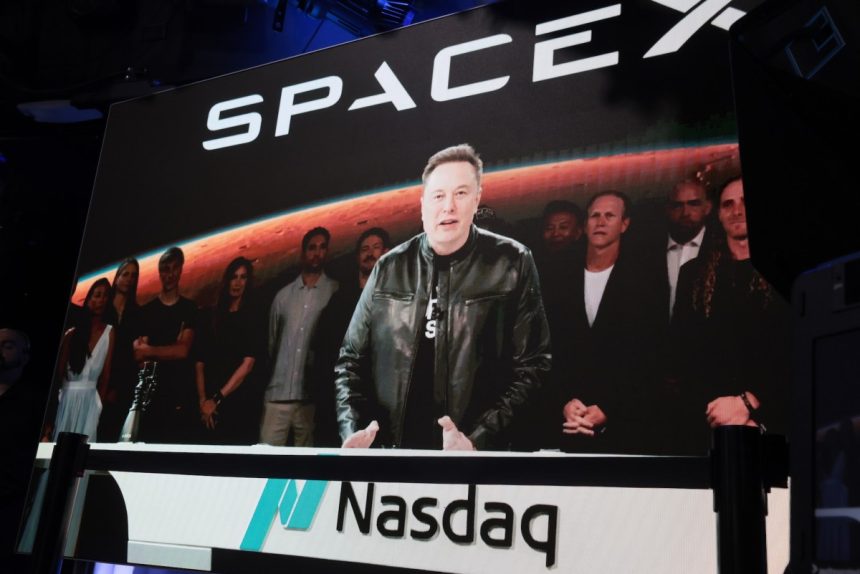
Elon Musk is moving to bring a young optics startup into the SpaceX fold, and the antitrust gatekeepers have already waved it through. A Federal Trade Commission filing — first reported by Bloomberg — confirms that the agency expedited its review of SpaceX’s potential acquisition of Mesh Optical Technologies, the kind of fast-track decision that usually signals a deal regulators see little reason to block.
Mesh Optical is barely out of its founding sprint. It emerged from stealth in February with a $50 million Series A led by Thrive Capital, and its pedigree reads like a SpaceX reunion. Co-founders Travis Brashears, Cameron Ramos and Serena Grown-Haeberli previously built the optical communication links that keep thousands of Starlink satellites talking to one another in orbit — a problem that demands moving enormous amounts of data through light with brutal efficiency.
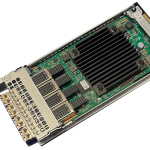
That experience is the whole pitch. The trio spotted an opening to take satellite-grade optics and aim them at terrestrial data centers, developing optical transceivers that shuttle information as light rather than electrical signals. The advantage is straightforward physics: light-based interconnects are faster and more energy-efficient than the copper-and-current plumbing most server racks still rely on.
Why does Musk care? Because SpaceX has quietly become a compute landlord. The company has struck deals with Anthropic, Google and open-source AI developer Reflection AI to supply data center capacity — a fresh revenue stream for the newly public firm and one that scales only as fast as the hardware underneath it.
Modern AI clusters are bottlenecked less by raw chip horsepower than by how quickly data can move between thousands of accelerators. Every watt spent pushing electrons through traditional links is a watt not spent on computation, and at hyperscale those losses compound into eye-watering power bills. Optical interconnects attack exactly that pain point, which makes Mesh’s transceivers a strategically tidy fit for an operator selling efficiency by the rack.
There’s also a longer-horizon angle that is very on-brand for Musk. Mesh’s technology could sharpen the efficiency of SpaceX data centers wherever they sit — on Earth today, and potentially in space down the line, where the same orbital optics heritage that powers Starlink could one day wire up compute among the stars.
For now, this is an infrastructure play rather than anything you’ll plug in at home. Mesh sells through B2B channels into hyperscale environments, so there are no shelf prices or consumer specs to chase. But the trajectory is clear: the engineers who taught satellites to speak in light are about to do the same for the machines training the next generation of AI.