Industrial automation usually means buying purpose-built robots and rebuilding your workflow around them. HIVE wants to flip that logic entirely: instead of replacing machines, it retrofits the ones you already have with sensors and a software layer that lets them run on their own. The Norway-born startup, now headquartered in London, has just closed a $15 million pre-Series A round to push that idea further.
At the core is a proprietary foundational model designed to automate any on-site machine. Rather than being locked to a single vendor’s hardware, HIVE’s approach bolts intelligence onto existing equipment — the forklifts, production line tools and construction machinery already doing the work. The pitch is deceptively simple: keep the iron, add the brain.
The system splits labor in a genuinely clever way. Straightforward, repetitive tasks run fully autonomously, with the machine handling them without human input. When a job gets too complex or unpredictable for the model to tackle alone, control passes to remote teleoperators who step in and steer things through. It’s a pragmatic middle ground between full autonomy — which still stumbles on edge cases — and constant on-site staffing.
The economic case is where HIVE is staking its claim. The company expects its technology to drive the cost of a productive machine-hour down by 80%. That’s the kind of figure that gets industrial operators to sit up, particularly across sectors where equipment idles between shifts or sits waiting on a scarce human operator.
This isn’t a lab demo, either. HIVE says its technology is already deployed across several sites in Scandinavia, working autonomously across different machines in three distinct environments:
- Warehouses, where handling and logistics tasks are ripe for automation
- Production lines, where consistency and uptime are everything
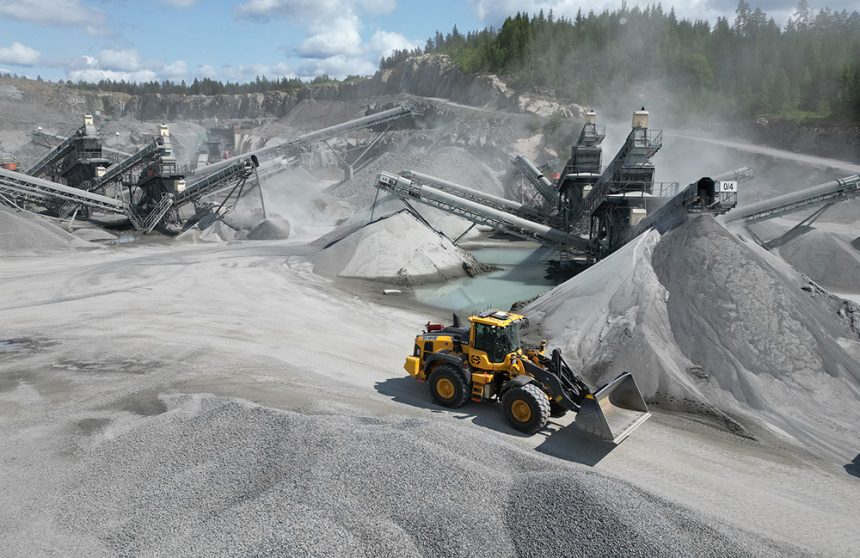
- Construction sites, historically one of the trickier settings for autonomous systems given their messy, ever-changing conditions
Founded in 2020, HIVE sits in the fast-growing “physical AI” camp — companies applying machine learning not to chatbots or images, but to hardware that moves things in the real world. It’s a space that has drawn serious attention as investors look for AI applications with tangible, measurable payoffs rather than speculative ones.
The fresh capital gives HIVE room to expand its foundational model, broaden the range of machines it can control and scale beyond its Scandinavian footprint. If the 80% cost reduction holds up outside carefully chosen pilot sites, the model-plus-teleoperation formula could prove far more deployable than the ground-up robotics that dominate industrial automation today. For now, HIVE has the funding and the early deployments to make its case — the next test is whether it can repeat the trick across wildly different machines and industries.