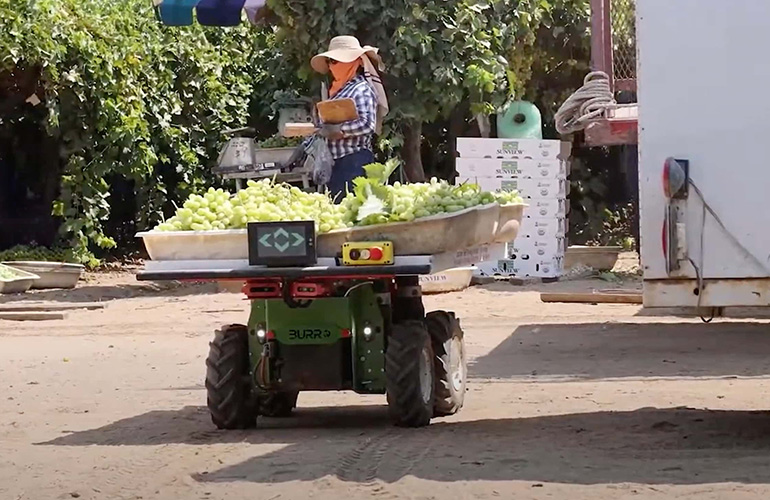
Most robots you’ll see in a demo video are living a charmed life. They roll across polished warehouse floors, follow pre-mapped routes, and phone home to a robust wireless network whenever they need to think. Take that same machine outdoors — into a quarry, a disaster zone, or a muddy construction site — and the illusion collapses fast.
That gap between the lab and the real world is exactly what infrastructure-free robotics is trying to close. The core idea is simple to state and brutally hard to execute: build machines that don’t depend on external scaffolding to function. No pre-installed markers, no guaranteed GPS lock, no assumption that a cellular signal will always be there when a decision needs to be made.
Why does this matter so much? Because the environments where robots could do the most good are precisely the ones where infrastructure is either absent or actively hostile. Consider what a truly self-reliant field robot has to handle:
- Unpredictable terrain — surfaces that shift, crumble or change with the weather rather than staying flat and predictable.
- No reliable connectivity — meaning perception and planning have to run onboard, not in some distant server farm.
- Harsh conditions — dust, water, temperature swings and vibration that would sideline a fragile indoor bot within minutes.
The engineering consequence is that intelligence has to move to the edge. A robot operating where signals drop out can’t wait for a cloud round-trip to decide whether that dark patch ahead is a shadow or a ditch. Sensing, localization and motion planning all have to happen locally, in real time, on hardware rugged enough to survive the abuse.
This flips a lot of conventional robotics thinking on its head. Indoor automation has spent years optimizing for tidy, controlled spaces — and it works beautifully there. But the moment you remove the guardrails, robustness stops being a nice-to-have and becomes the whole ballgame. A system that thrives outdoors is one designed from the start to expect the unexpected, degrade gracefully when a sensor is blinded, and keep operating when the map it started with no longer matches reality.
It’s a philosophy that rewards humility as much as horsepower. Rather than assuming the world will cooperate, infrastructure-free design assumes it won’t — and builds machines resilient enough not to care. That mindset is what separates a slick showroom prototype from a robot that can actually earn its keep in the field.
For the robotics industry, this is where a lot of the real value is hiding. The applications that justify the hype — inspection, agriculture, mining, search and rescue — all live outside, in the mess. Cracking infrastructure-free autonomy isn’t a niche pursuit; it’s the difference between robots that demo well and robots that work.