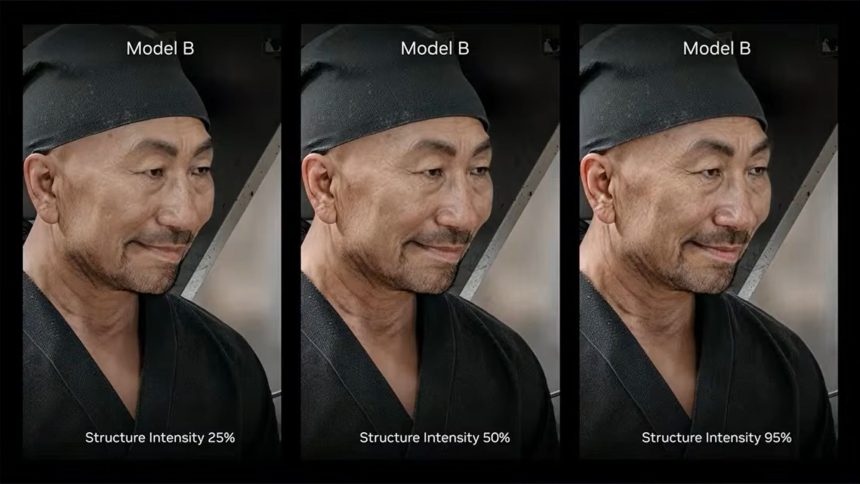
When Nvidia unveiled DLSS 5 back in March 2026, the reaction was less than universally warm. The idea of handing scene reconstruction to a real-time neural rendering model sounded, to a lot of developers, like handing the keys to a car that steers itself — great until it decides your character’s face should look slightly different than intended. Months of grumbling later, Nvidia has come back with answers, and they’re more reassuring than the initial pitch suggested.
The core promise now is control. Rather than a black box that reinterprets a frame however it sees fit, DLSS 5 exposes its behaviour to the people building the game. Developers can configure how individual objects, scenes and settings get processed, meaning character appearance, lighting, animation and overall art direction stay exactly where the creators want them. In other words, the neural model does the heavy lifting, but it doesn’t get a vote on your visual identity.
That flexibility comes from a trio of models baked into the tech:
- Model A, Model B and Model C, each offering a different level of structural intensity, global illumination and texture detail.
- The models can be mixed and matched per scene, so a studio might lean on one profile for a moody interior and another for a wide-open, light-drenched vista.
This granularity is the crux of Nvidia’s rebuttal to the artistic-intent worries. Instead of a single dial that trades fidelity for performance, DLSS 5 lets a team choose the reconstruction character of a given moment — and lock it down so the AI doesn’t drift from the intended look between frames or areas.
Performance-wise, the headline is that DLSS 5 runs in real time up to 4K on a single GPU. That’s a meaningful claim for a neural rendering pipeline of this ambition, and it keeps the technology within reach of a normal gaming rig rather than demanding some exotic multi-card setup.
It’s worth being clear about what DLSS 5 is: developer technology, not a boxed product you’ll be buying off a shelf. There’s no price, because it isn’t sold to players directly — it ships inside the games that adopt it. The value proposition, then, is aimed squarely at studios weighing whether to trust an AI with their frames.
As for timing, DLSS 5 is expected to arrive during Q3 2026, with the launch targeted for the Fall. That puts it close on the horizon, and the shift in messaging suggests Nvidia spent the intervening months listening rather than just marketing. The original announcement raised legitimate fears that upscaling was becoming reinterpretation. The revised story is a lot more palatable: DLSS 5 is fully controllable from the developer, and that single sentence does more to sell the technology than any amount of pixel-peeping comparison footage.
Whether studios embrace the extra tuning burden is another question — but at least the option to keep their vision intact is now firmly on the table.