Michael Mann’s Heat isn’t just one of the greatest crime dramas ever committed to film — it’s also a brutal, unforgiving benchmark for whatever audio-visual setup you’ve assembled in your living room. And right now it’s streaming on Amazon Prime Video, but not for long, so this is your window to put your kit through its paces.
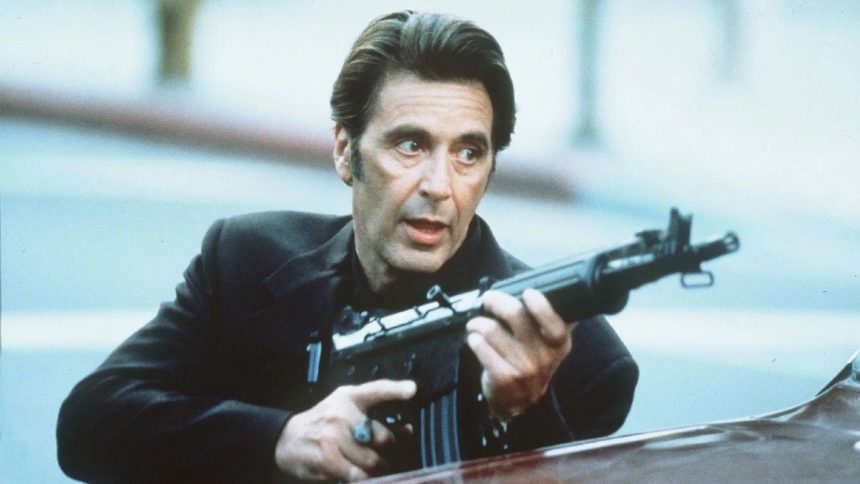
The film is best known for its downtown Los Angeles shootout, a sequence that has become shorthand among home cinema enthusiasts for a very good reason. The gunfire in this scene was recorded and mixed with a rawness that few action films have matched since. Assault rifle reports crack with a hard, dry snap rather than the bloated boom Hollywood usually favours, and the sound bounces off concrete and glass in a way that fills a properly calibrated room.
Why it’s such a demanding test:
- The gunfire exposes any tendency your system has to smear or compress transient detail — cheap speakers turn the shots into a muddy roar.
- The chaotic, overlapping layers of echo and reverberation reveal how well your setup handles a dense soundstage without collapsing into noise.
- Dialogue and ambient street sound underneath the chaos test your centre channel’s ability to stay intelligible under pressure.
- The sheer dynamic range — from tense near-silence to deafening exchanges — is a workout for any amplifier and subwoofer.
It’s not only about the ears, either. Mann shot much of the film with an eye for cold, clinical LA nightscapes, all sodium-vapour orange, deep shadow and neon reflection. That palette is a genuine challenge for displays: it demands convincing black levels, subtle shadow detail and controlled highlights. A panel that crushes blacks or blows out the streetlights will strip the film of the mood Mann worked so hard to build.
The good news is that you don’t need a reference-grade cinema to appreciate it — but you’ll quickly learn where your system’s limits lie. If the shootout leaves your ears ringing and your subwoofer breathing hard, and the night scenes retain their inky depth without disappearing into a black smear, your setup is in good shape. If everything turns to mush, you’ve just found your next upgrade project.
Beyond the technical showcase, it remains a masterclass in filmmaking, with the famous diner scene between Robert De Niro and Al Pacino delivering more tension in a few minutes of quiet conversation than most thrillers manage across two hours. It’s the cat-and-mouse dynamic — cop and thief, mirror images of one another — that gives the film its enduring pull.
Fire it up, dim the lights and turn it up. Just maybe warn the neighbours first.