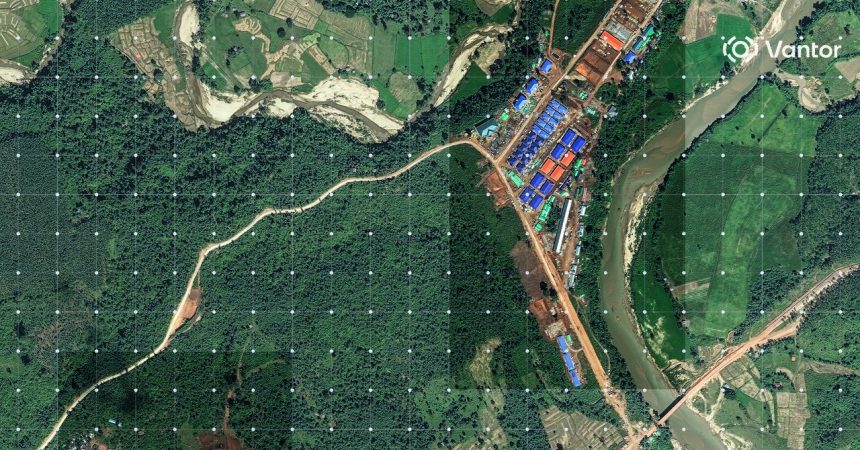
Satellite internet was supposed to connect the unconnected. In Myanmar’s Myawaddy region, it appears to be connecting something far darker. A fresh analysis of satellite imagery reviewed by WIRED shows that more than two dozen suspected scam compounds have been built or dramatically expanded in the past six months — and Starlink terminals are keeping many of them online.
According to the International Justice Mission (IJM), an anti-human-trafficking nonprofit, at least 25 alleged scamming sites have appeared near Myanmar’s border with Thailand since roughly the start of the year. The imagery tells a grim story of industrialized crime: forest razed, land flattened, and clusters of buildings rising from empty fields. At one site, around 24 buildings appeared between January and April alone.
“The pace of construction is significant — some of these are going from empty fields to operational compounds in a couple months,” says Eric Heintz, a global analyst at the IJM who studied the sites. The layout, he notes, matches the 30-plus larger compounds already documented in the area, right down to the big accommodation blocks likely used to house trafficking victims.
Here’s where the technology angle gets uncomfortable. These compounds don’t run on local infrastructure — they run on foreign internet service providers, and increasingly on Elon Musk’s satellite network. A WIRED investigation last year found at least eight compounds in Myawaddy apparently using Starlink devices, some with antennas bolted to their rooftops. US law enforcement later ordered the seizure of Starlink terminals at some sites.
The problem hasn’t gone away. “We continue to see Starlink being used, with at least half of these new locations using their terminals — we know exactly where these compounds are, and in some cases know the IPs used by Starlink connections from these compounds, and it remains unclear why the company can’t shut these off,” Heintz says.
Heintz’s tracking suggests plenty of terminals are still humming along, giving fraud operations the low-latency, hard-to-throttle connectivity that terrestrial networks in a war zone simply can’t provide.
The compounds are the engine room of a global scam economy — romance and cryptocurrency cons that have siphoned billions from victims worldwide, largely run by Chinese organized crime groups. Much of the grinding daily work is done by trafficking victims from more than 60 countries, lured with fake job offers and then forced to scam around the clock.
Myanmar’s military junta staged headline-grabbing raids starting around October, blowing up buildings and steamrolling phones and computers. The satellite data suggests the theater changed little. Mechelle B. Moore, CEO of nonprofit Global Alms Incorporated, identified at least a dozen new sites and found that some areas thought to be emptied are populated again, with new victims inside.