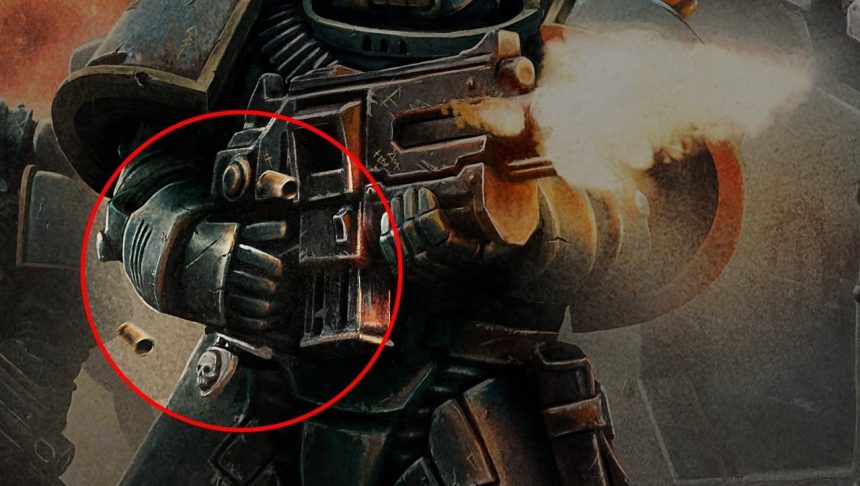
Games Workshop, the studio behind the sprawling Warhammer 40,000 universe, has faced questions about errors spotted in its product imagery, prompting concern over whether its staff had quietly leaned on generative AI to produce the artwork.
For a company that trades heavily on hand-crafted miniatures, painstaking box art and a devoted community of hobbyists, the stakes here are more cultural than technical. Warhammer fans notice things. A stray extra finger, a warped weapon, a piece of nonsensical background text — the kind of tell-tale glitches that AI image generators became infamous for — are exactly the sort of details that set the community buzzing and prompt accusations of automated shortcuts.
The stakes centered on whether the anomalies were errors to be examined rather than dismissed. The core question was whether the flawed visuals were the product of ordinary mistakes made by human artists and designers, not signs of machine-generated content slipping into official materials.
The distinction matters because the studio has publicly staked out a firm anti-AI position for its creative work. In an industry increasingly tempted by the speed and cost savings of generative tools, Games Workshop has positioned itself on the side of human artistry — a stance that resonates with a fanbase that prizes the craft behind every Space Marine and Ork.
It’s a telling snapshot of where creative studios now find themselves. The mere possibility that AI might have been used is enough to warrant scrutiny, and the burden of proof has quietly flipped: companies are now expected to demonstrate that their imagery is genuinely human-made rather than assume anyone will take it on faith.
Part of the challenge is that human error and AI error can, at a glance, look uncomfortably alike. Anatomical oddities, inconsistent details and small visual mistakes have long existed in illustration and product photography — well before diffusion models arrived. What’s changed is the interpretation. Today, an imperfection that would once have been shrugged off as a slip of the stylus now invites scrutiny about its origins.
For Games Workshop, the takeaway is reputational. By taking the integrity of its imagery seriously, the company signals that it understands its audience is watching closely.
The episode is a useful reminder for the wider consumer and entertainment space: as generative tools become ubiquitous, trust in imagery is becoming something brands have to actively defend. For a franchise built on grim, meticulous world-building, keeping the humans firmly in charge of the artwork isn’t just principle — it’s part of the product.