Apple is quietly assembling its most ambitious assault on the smart home yet, and the centerpiece is a device commonly referred to as the Home Hub. According to Bloomberg’s Mark Gurman, the company is targeting a launch window that stretches from October 2026 into early 2027 — a wide berth that hints at just how tightly this hardware is bound to Apple’s overhauled, AI-driven Siri.
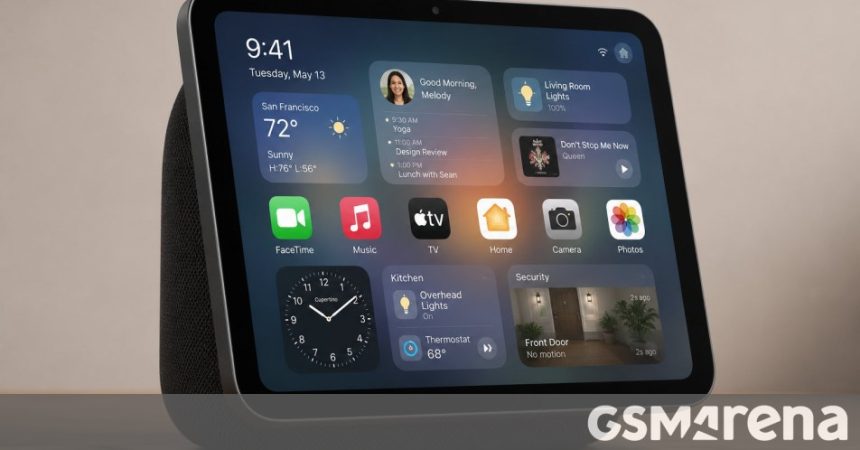
Picture a HomePod that grew a face. The Home Hub is described as a HomePod-style smart speaker paired with a 7-inch display, effectively giving Siri somewhere to actually show you things rather than just talk at you. And it’s the new Siri — rebuilt around Apple’s latest AI push — that’s meant to be the reason you buy one in the first place.
The more intriguing part is under the hood. The device is said to run an entirely new operating system built on tvOS, with an interface that borrows liberally from across Apple’s platforms:
- tvOS as the foundational layer
- watchOS influences, most visibly in the customizable clock faces
- iOS conventions like a familiar grid of app icons
On paper that means a home screen filled with icons, widgets and apps, plus swappable clock faces for when the hub is just sitting on a counter looking pretty. It’s a sensible mash-up: the ambient, glanceable feel of an Apple Watch face married to the app-centric logic iPhone owners already understand.
Apple, tellingly, isn’t imagining a single unit per household. The company reportedly expects buyers to pick up more than one and scatter them around the home — a kitchen, a hallway, a bedside table — turning each into a node for Siri, HomeKit control and quick information. That’s a familiar playbook for anyone who’s watched the smart-display category evolve, but Apple’s version arrives late and leans heavily on the promise that its reworked assistant will finally make voice-and-screen interactions feel genuinely useful.
A word of caution on all of this: none of it is official. As of now, Apple has not announced the Home Hub, and there is no confirmed name, price or final spec sheet from Cupertino itself. Everything here traces back to reporting and industry leaks rather than a keynote stage. The 7-inch screen, the tvOS-based software, the multi-unit strategy — treat them as well-sourced expectations, not guarantees.
Still, the shape of Apple’s smart-home ambitions is coming into focus. After years of the HomePod feeling like a speaker in search of a purpose, a display-equipped hub built explicitly around a smarter Siri could be the piece that ties Apple’s home story together — assuming the software lives up to the hype when it finally ships.