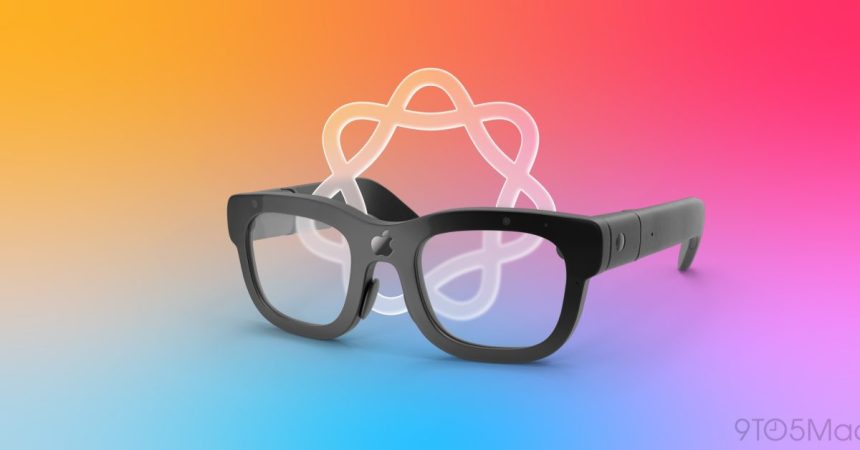
Apple’s long-rumored smart glasses are shaping up to be more than a hands-free display for notifications and calls. According to Mark Gurman’s latest Power On newsletter, the company sees its wearable eyewear as a future platform for health and fitness — a natural extension of the ecosystem it has built around the Apple Watch and iPhone. There’s a catch, though: those capabilities won’t be part of the story when the first model arrives.
To be clear, these are non-AR glasses. That distinction matters. Apple isn’t chasing the immersive, camera-heavy augmented reality vision that defines products like the Vision Pro. The initial device is expected to focus on a lighter, everyday experience rather than layering digital objects over the real world.
The health ambitions, meanwhile, are a longer-term play. Gurman reports that Apple is working toward positioning the glasses as a serious wellness companion, but that the sensors and features needed to make that happen aren’t slated for the first generation.
Why the wait? Cramming meaningful health tracking into a frame that sits on your face is a genuinely hard engineering problem. Unlike a wrist-worn device with steady skin contact, glasses have to balance weight, battery life, comfort and all-day wearability before you even get to biometric accuracy. It’s easy to see why Apple would rather ship a polished, wearable-first product and add the ambitious sensor suite once the fundamentals are locked in.
On timing, the picture has shifted. Apple initially planned to introduce its smart glasses at the end of 2026 and ship them by early 2027, but the project has reportedly slipped. Health features specifically aren’t expected until a later revision, which could debut toward the end of 2027.
The strategy tracks with how Apple has handled hardware before. The first Apple Watch was pitched more as a fashion accessory and iPhone companion than the health guardian it eventually became. Blood oxygen, ECG and fall detection all showed up over successive generations. Smart glasses look set to follow the same slow-burn playbook: launch with a focused feature set, then expand once the platform has an install base worth building for.
A few important caveats. Apple has not officially announced these glasses, so there’s no confirmed name, price or spec sheet. Everything here rests on reporting and industry chatter rather than anything Cupertino has put on the record. Dates have already moved once, and they could move again.
Still, the direction is telling. If Apple genuinely intends to turn everyday eyewear into a health hub, it would open a new front in the wearables race — one where the competition is thinner and the potential far larger than novelty glances at your notifications. For now, the message is simple: the health revolution in your glasses is coming, but you’ll have to be patient.