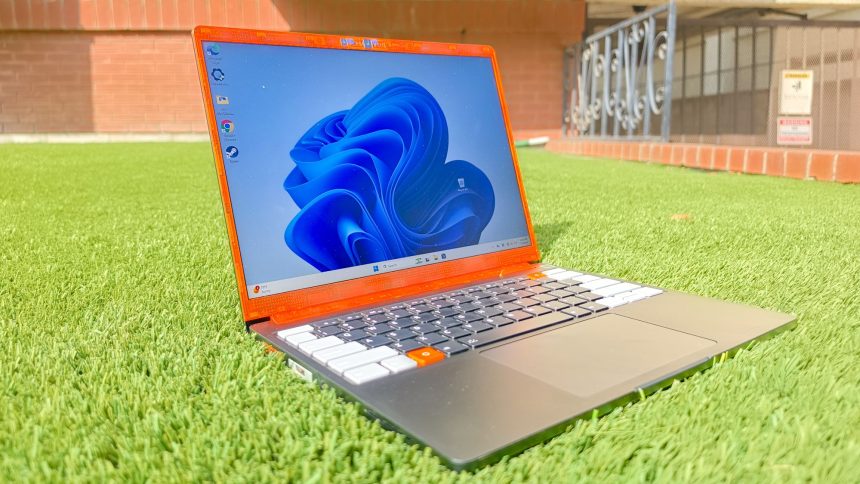
Framework has spent years chasing a single stubborn idea: a laptop you can actually take apart, upgrade and fix without a heat gun and a prayer. With the Framework Laptop 13 Pro, announced on April 21, 2026, that idea finally graduates from clever curiosity to genuinely desirable machine. The catch? A memory market gone haywire is doing its best to price the thing out of reach.
Start with the good news, because there’s plenty. The 13.5-inch 3:2 touchscreen is a real step up, pushing a crisp 2880×1920 resolution with a 30–120Hz variable refresh rate and up to 700 nits of brightness. That tall aspect ratio remains a productivity dream — more code, more spreadsheet, more of whatever you’re grinding through before the screen edge cuts you off.
Under the hood you pick your camp: Intel Core Ultra Series 3 (Ultra 5, Ultra X7 or Ultra X9) or AMD Ryzen AI 300. Memory tops out at 64GB LPCAMM2 LPDDR5X, and crucially it’s the swappable LPCAMM2 kind rather than soldered — exactly the sort of user-serviceable choice Framework built its name on.
The refinements go deeper than the spec sheet suggests. There’s a new 123.7mm × 76.7mm haptic touchpad driven by piezoelectric actuators, which finally brings Framework’s clicking experience in line with the premium crowd. Battery capacity sits at 74Wh, with Framework claiming up to 20 hours of runtime — a figure that, even discounted for optimism, points to a machine you can trust away from an outlet.
All of this makes the 13 Pro the most polished repairable laptop yet. So where’s the problem? Pricing. The DIY Edition starts at US$1,199, with a pre-built configuration at US$1,499 — reasonable on paper. But the ongoing RAM shortage has turned memory into the villain of this story. LPCAMM2 modules have climbed to eye-watering heights: $800 for 32GB and $1,600 for 64GB. Suddenly the very modularity that makes Framework special becomes the line item that torpedoes the value.
It’s a cruel irony. The whole pitch is that you buy less, upgrade later and never pay for RAM you don’t need. When RAM itself costs more than some entire laptops, that math stops working, and the 13 Pro risks staying locked in the nerdy locker it’s finally earned the right to leave.
First units shipped in June 2026, and as of now every configuration is available for pre-order, with shipments scheduled for November 2026. The engineering is there. The philosophy is there. Whether the memory market lets buyers say yes is entirely out of Framework’s hands.