The U.S. Federal Communications Commission has drawn a hard line through the robotics market. On 28 July, the agency expanded its 2021 Covered List — the roster of communications gear deemed a national security threat — to include mobile, communicating robots weighing more than 2 kilograms, along with power inverters used in solar panels. The practical effect is blunt: new foreign-made robots in these categories are no longer eligible for import.
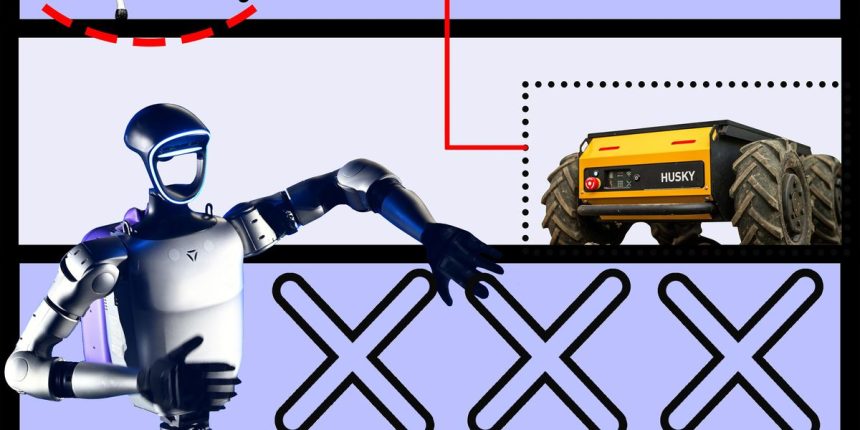
The FCC’s language is sweeping. It declares that all foreign-produced “advanced robotic devices” pose an unacceptable risk to U.S. national security, unless the Department of Defense decides otherwise. So what counts as an advanced robotic device? Per the FCC, it’s a mobile system with on-board sensing, communications, and some degree of autonomy. That net catches everything from robot dogs to sidewalk delivery bots and even robovacs.
There are, however, some quirky loopholes. Systems under 2 kg are exempt, as are devices that communicate at less than 200 kilobits per second — an opening that invites some creative engineering. Drones, connected vehicles and medical devices dodge this round entirely, having faced their own regulatory gauntlets earlier. Crucially, the ban applies only to new devices; anything already certified can still be sold and used.
The justification, laid out in Appendix C, rests on two pillars: mobile robots matter to both the economy and the military, so the U.S. wants its own supply chain; and these robots increasingly monitor sensitive infrastructure, making them a potential surveillance risk. To make the case, the DOD even cited an IEEE Spectrum report on a critical vulnerability in robots from Hangzhou-based Unitree.
Officially, the FCC insists the move is “country neutral.” Nobody’s buying that. National security sources point squarely at China, and Beijing’s Ministry of Commerce fired back on 29 July, calling the measures discriminatory protectionism dressed up as non-discrimination.
For foreign firms hoping to stay in the game, the path is steep. Applicants must submit to both the DOD and FCC by 1 January 2028, and provide a detailed, time-bound plan to establish or expand U.S. manufacturing. Ironically, because China supplies so many robot components, it retains leverage even over robots assembled on American soil.
Industry reaction is split. Boston Dynamics policy VP Brendan Schulman endorsed the ban on LinkedIn, calling it “just the first round.” Others are calmer: ANYbotics strategy VP Philipp Frey says U.S. enterprise buyers already weigh reliability, cybersecurity and serviceability over hardware cost, and his Swiss firm plans to seek conditional approval.
Not everyone thinks a blanket ban is smart. Critics warn that crude bans could ultimately slow innovation across the entire U.S. robotics ecosystem.