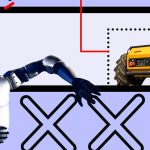
Robots destined for orbit have a cruel design problem: every gram matters, yet the motors that move joints and steer instruments still tend to be bulky. HEBI Robotics, the Pittsburgh-based specialist in modular actuation, is tackling that head-on with a NASA Small Business Innovation Research (SBIR) Phase I award aimed at miniaturizing its actuators for spacecraft.
The goal sounds simple and is fiendishly hard: build actuators small and light enough for CubeSats and other small satellites, while still delivering the kind of force normally reserved for chunkier ground-based hardware. On a satellite, real estate and mass are effectively currency, so squeezing high torque into a tiny, lightweight package is exactly the sort of engineering knot that decides whether a mission flies or stays grounded.
An actuator, in HEBI’s world, is more than a motor. Its existing modules bundle the motor, gearing, sensing and control electronics into a single self-contained unit — the robotics equivalent of a smart muscle you can bolt together like building blocks. Scaling that philosophy down for space means keeping the intelligence and the grunt while stripping out size and weight, all without letting the thing overheat or fall apart under launch stresses.
The Phase I contract, announced in September 2024, runs through December 2026 and remains active. Phase I grants are deliberately early-stage: NASA is funding feasibility work and prototype actuators rather than flight-ready hardware, testing whether the concept holds up before anyone commits to a bigger build. In other words, this is the drawing-board-with-a-budget stage, not a product you can order.
Importantly, HEBI has framed the NASA project as one lane of a wider roadmap rather than a pivot. The company says it plans to keep developing its existing actuation hardware alongside the miniaturized space-focused work. That matters, because the tech that comes out of shrinking an actuator for a satellite rarely stays locked to orbit — tighter, more force-dense modules tend to trickle back down to terrestrial robots, from research arms to compact automation where the same space-and-weight math applies.
What we don’t have yet are the numbers that usually make a spec sheet sing: no torque figures, no dimensions, no mass targets, no pricing, and certainly no launch date for anything you could actually buy. Phase I awards simply don’t come with a storefront. But the direction is clear and worth watching. If HEBI can package meaningful force into an actuator small enough for a CubeSat, it edges the whole industry toward a future where capable robots ride to space on smaller, cheaper platforms — and where the motors doing the work are barely bigger than the bolts holding them in place.