Sometimes the best hardware review isn’t about megapixels or refresh rates — it’s about what a camera manages to catch when nobody’s watching. In this case, a humble trail camera bolted to a tree in Exmoor did something no photographer has managed in over 100 years: it recorded the birth of wild pine marten kits in southwest England.
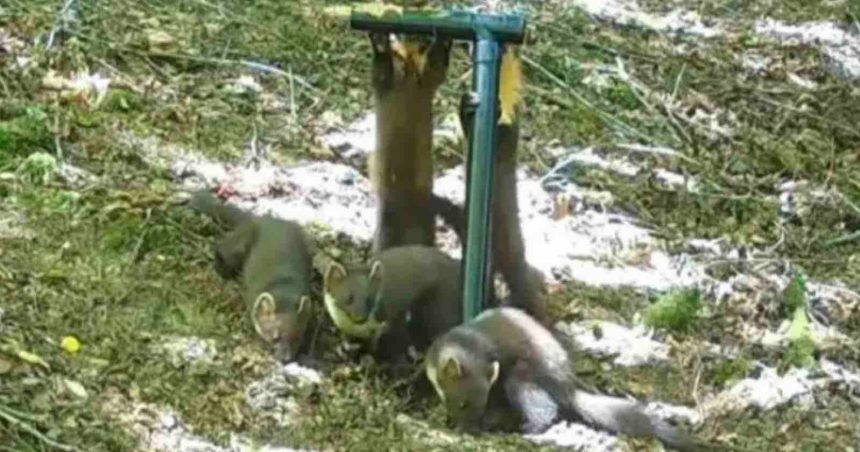
The footage shows a female pine marten leading four kits through the woodland as they investigate a bait station. The scene is charming, but the science behind it is what matters. This is the first hard evidence that pine martens released under the Two Moors Pine Marten Project are successfully breeding in the region, where the species had all but vanished.
Trail cameras are the unsung workhorses of modern conservation. They sit motionless for months, triggering on movement, quietly building a photographic record of animals that are otherwise almost impossible to observe. Pine martens make that job especially hard: they’re highly mobile, deeply shy of people, and primarily nocturnal. Without remote cameras running around the clock, this family group would likely have gone entirely unseen.
The setup that lured them in is refreshingly low-tech. According to Devon Wildlife Trust, the bait station was filled with a mixture of peanut butter and fish oil — a combination conservationists say pine martens find irresistible. The station sat in woodland on Exmoor, near areas managed by the National Trust and the Exmoor National Park Authority.
“These clips were recorded on cameras being monitored by one of our brilliant project volunteers,” said Ali North, the project’s field officer for Exmoor. “We were incredibly excited to finally see kits after so many months of intensive monitoring.”
The numbers make the sighting even more remarkable. As North explained, mothers give birth in March or April and typically have two to three kits. Four kits at a single station suggests the habitat is thriving. “To see four with their mum was an amazing sight and suggests that Exmoor is the perfect home for these animals,” she said.
The project’s ambitions stretch beyond a single filming milestone. Fifteen pine martens have also been released in Dartmoor National Park, with the goal of restoring a native predator that helps keep woodland ecosystems balanced. North was quick to credit the wider effort, noting that local people helped with everything from building den boxes to installing and regularly checking the remote cameras.
For the record, pine martens are tree-dwelling mammals mostly found in the northern UK, especially Scotland. They’re excellent climbers, nesting in tree holes and old squirrel dreys, and feed on small rodents, birds, eggs, insects and fruit. Females can have anywhere from one to five young, which become independent by autumn.
It’s a reminder that the most meaningful images aren’t always the sharpest — sometimes they’re just the ones nobody expected to get.