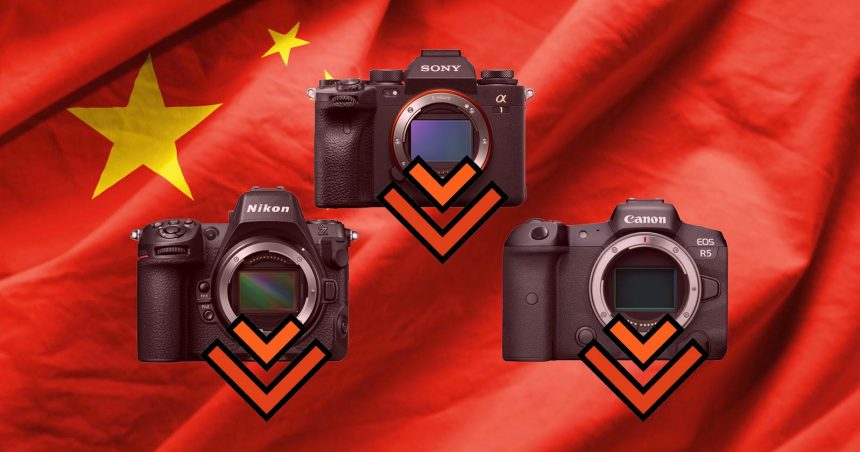
For an industry that has spent years chasing recovery after the smartphone wiped out the compact camera market, the last thing photo manufacturers needed was another headwind. Yet that is exactly what China’s cooling economy has delivered.
Rewind a couple of years and the picture looked very different. China’s economy was expanding at a pace that had global companies — camera makers very much included — revising their financial outlooks upward. When one of the world’s largest consumer markets is booming, it makes sense to bake that optimism into your projections. Bigger sales, higher demand, ambitious targets.
Then the boom flipped. The rapid growth that manufacturers had counted on didn’t materialize, and the inflated expectations set during the good times became a liability. The result is predictable but painful: companies that pinned their forecasts to a surging Chinese market ended up missing those numbers.
Why does this matter so much for photography specifically? A few reasons stand out:
- China is a huge slice of the pie. For premium mirrorless bodies, high-end lenses and enthusiast gear, the Chinese consumer base has become one of the most important growth engines in the industry.
- Expectations were set high. When manufacturers plan production, marketing and product launches around aggressive growth, a slowdown doesn’t just soften results — it turns them negative against the plan.
- The camera market has little cushion. Unlike smartphones or PCs, dedicated cameras occupy a niche that has already contracted dramatically. There isn’t much slack to absorb an unexpected regional downturn.
It’s a reminder that even the most enthusiast-driven corners of consumer tech are ultimately tied to macroeconomics. The gear you covet — the flagship mirrorless system, the exotic fast prime — exists inside a supply chain and a business model that depends on people actually buying it, and buying it at the rate the accountants penciled in.
The broader lesson here is about the danger of straight-lining a good year into the future. Growth trends don’t continue forever, and building a business around the assumption that they will leaves you exposed the moment conditions shift. Camera manufacturers rode China’s upswing enthusiastically; now they’re navigating the correction.
None of this means the photo industry is in crisis. Companies adjust forecasts, recalibrate expectations and move on. But it does underline how deeply the fortunes of the gear we love are entangled with forces far outside the world of sensors, lenses and shutter counts — and how a slowdown thousands of miles away can ripple all the way to the next product cycle.