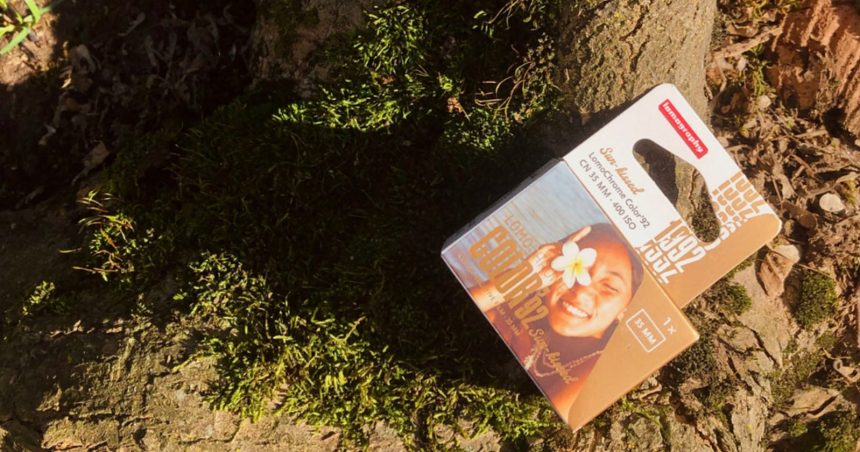
Film photography refuses to fade quietly into the archive, and Lomography keeps finding new ways to keep it interesting. Back in July 2024 the brand added a fresh flavor to its experimental Lomochrome family: the LomoChrome Color ’92 Sun-kissed, a color negative stock built specifically for nostalgia hunters and anyone who likes their frames with a little unpredictability baked in.
The name is the mission statement here. This isn’t a clinical, true-to-life emulsion aiming for perfect color accuracy. Instead, Sun-kissed leans into a warm, golden-hour vibe — the kind of hazy, sunlit look that makes ordinary afternoons feel like memories the moment you shoot them. It’s a film with character, and that character is entirely its own.
Technically, it plays nicely with standard workflows. Sun-kissed is a C-41 process color negative film, so any lab that develops regular color rolls can handle it without special treatment. Lomography rates it across a flexible ISO 100–400 range, giving you room to expose creatively depending on light and mood rather than locking you into a single box speed. That latitude is part of the fun: push it, pull it, shoot it wide open in bright sun — the results shift with your choices.
Format coverage is generous for an experimental emulsion. It comes in 35mm and 120, so both compact rangefinders and medium-format shooters can play along, and there’s even a 110 cartridge for the pocket-camera crowd that never truly went away.
Pricing keeps the barrier to entry low, which matters when you’re buying film to experiment rather than to preserve for posterity. A single roll breaks down like this:
- 35mm: US$12.90 per roll
- 120: US$11.90 per roll
- 110 cartridge: US$8.90
Two years on from its debut, the film is firmly established rather than a fleeting curiosity, and it remains available through Lomography’s online store. That longevity says something: analog shooters clearly responded to a stock that trades technical neutrality for personality.
What makes Sun-kissed worth loading is exactly what makes it hard to describe on a spec sheet. The numbers tell you it’s a C-41 negative film across three formats with a broad ISO range — but the appeal lives in the way it renders light. If you’ve grown tired of digital filters approximating a look, here’s the analog original: warm tones, gentle nostalgia and the small thrill of not knowing quite what you’ll get until the scans come back.
For film fans who treat each roll as an experiment rather than a chore, that unpredictability is the whole point — and at these prices, it’s an easy one to indulge.