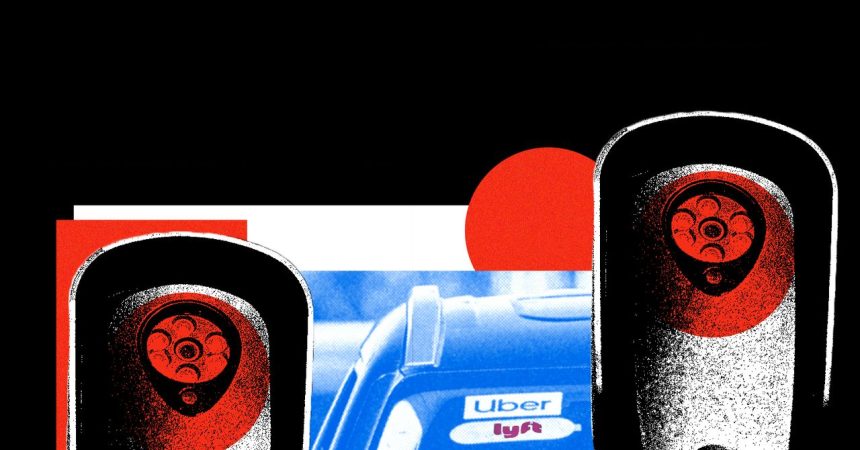
Imagine every Uber, Lyft, and delivery car in your city quietly reading license plates as it drives past — color, make, model, and location, all fed into a database used by police. That’s not a hypothetical. It’s a plan that surveillance company Flock Safety actually pitched, and it very nearly became reality.
According to documents obtained by 404 Media through a public records request filed by a Dunwoody, Georgia resident, Flock prepared a sales presentation last August for the Georgia Attorney General’s Office. The centerpiece: a partnership with dashcam maker Nexar that would have tapped into 350,000 devices mounted in rideshare and delivery drivers’ vehicles.
Here’s what makes this different from Flock’s usual playbook. The company’s automated license plate readers are typically bolted to poles, scanning every car that rolls past a fixed point. The Nexar arrangement would have flipped that model on its head — turning a stationary camera grid into a mobile, roaming dragnet blanketing entire cities wherever gig workers happened to drive.
Flock told 404 Media the partnership never went through. Uber, Lyft, and Nexar didn’t respond to requests for comment, and crucially, there’s no indication drivers would ever have known their cameras were quietly feeding the network.
That last detail lands harder given what happened to Nexar in September, when a hacker walked off with terabytes of customer video. Some of that footage, it turned out, had been shot around Defense Department sites — a stark reminder of what happens when a sprawling camera network becomes a single point of failure.
The revelations don’t stop at hardware. A former Flock government affairs manager, Jonathan Paz, said he quit in July 2025 — turning down equity and severance — after learning the company had handed ICE and Customs and Border Protection direct camera access through a pilot program, all while internally telling staff it did not work with ICE.
404 Media also surfaced a coaching guide Flock hands to police departments, essentially a script for winning over local government. Among its recommendations:
- Brief city council members and city managers privately before public meetings
- Arrive with a polished, scripted presentation
- Reframe the debate away from cost and toward “the cost of unresolved crime”
It’s a telling glimpse into how modern surveillance tech gets sold — not with a splashy product launch, but with quiet lobbying and carefully managed messaging. The rideshare dashcam network may have died on the presentation slide, but the ambition behind it says plenty about where automated plate-scanning is headed.
For gadget owners, the takeaway is uncomfortable: the dashcam you bought for insurance disputes, or the phone in a stranger’s Uber, can just as easily become a node in someone else’s surveillance grid — often without a single line of consent.