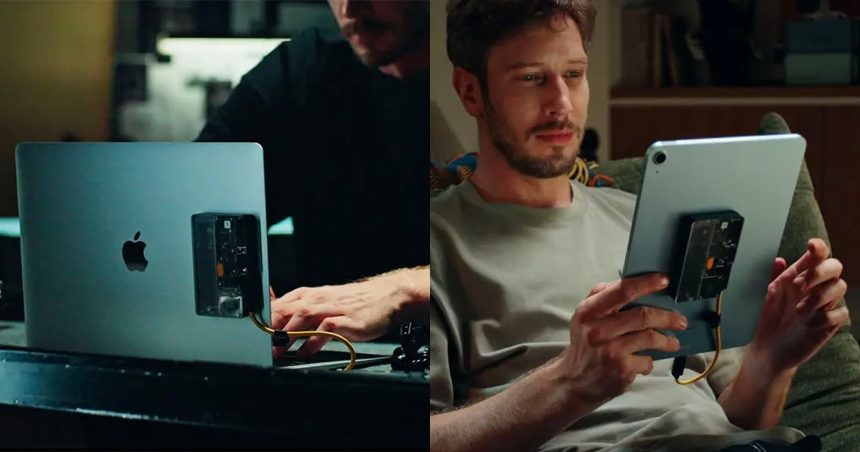
The original Sharge Disk Pro was a clever bit of engineering with one glaring flaw: a cooling fan loud enough to remind everyone in the room that you owned it. The Sharge Disk Pro 2 sets out to fix that and a few other rough edges, and it does so with a genuinely useful trick — you can now toggle that obnoxious fan off entirely when you don’t need it.
At its heart, the Disk Pro 2 is a hybrid device: part swappable M.2 NVMe SSD enclosure, part compact USB-C docking station. That dual identity is what makes it interesting. You slot in your own drive, and the whole thing turns into a travel-ready hub that hangs off a single USB-C cable.
On the storage side, it supports swappable internal SSDs up to 8TB, accepting standard M.2 NVMe and B&M NVMe drives. Better still, it isn’t picky about form factor, taking 2280, 2242 and 2230 sizes — so whatever spare drive you have lying around should drop right in.
As a dock, it packs six ports total, including a removable USB-C cable, SD and microSD card slots, and a 5Gbps USB-A port. The headline connection is HDMI, and here’s where the two variants split:
- Ultra: HDMI 2.1 with 4K 144Hz output, and remarkably low power draw of around 1W.
- Lite: HDMI 2.0 output, with power consumption closer to 4W.
That difference in efficiency matters more than it sounds. A dock that sips roughly 1W is far kinder to a laptop battery when you’re working untethered, which is exactly the scenario this gadget is built for.
Sharge ran the Disk Pro 2 as a crowdfunding campaign, which wrapped up on Sunday, 16th August. Kickstarter pricing landed at $49 for the Lite Early Bird tier and $55 for the standard Lite tier, while the Ultra came in at $75. Once the Ultra hits general retail, it’s expected to carry a full price of $89.
Backers are set to receive their units by October. For now it remains a crowdfunded product rather than something you can grab off a store shelf, so the wider release will be the real test.
On paper, the Disk Pro 2 does the sensible thing: it keeps the parts of the original that worked — bring-your-own-drive flexibility, a proper spread of ports, high-refresh HDMI — and quiets down the part that didn’t. For anyone who wants portable storage and a display hub in one palm-sized package, that’s a pretty compelling combination.