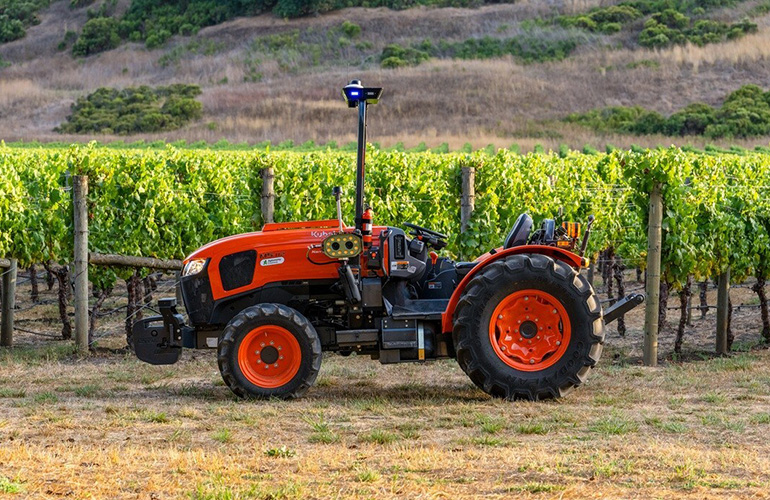
Forget chatty apps and photogenic humanoids. According to Agtonomy’s founder, the AI opportunity that actually moves the needle sits somewhere far less glamorous: the heavy machinery that plows fields, hauls loads and reshapes construction sites. The pitch is blunt — machines already have the brawn, so it’s time to give them a brain.
The reasoning is grounded in a problem that no software update can fix on its own. Agricultural and construction workforces are shrinking, and the equipment makers who serve those industries risk becoming irrelevant if their tractors and loaders still demand a full-time human in every seat. Layer autonomy and AI-driven decision-making onto that iron, the argument goes, and a single operator can suddenly oversee work that used to require a crew.
It’s a refreshingly pragmatic take at a moment when much of the AI conversation has drifted toward consumer gadgets and bipedal robots that look impressive in demo videos but struggle to justify their cost in the real world. Fields and job sites, by contrast, are exactly the kind of repetitive, physically demanding, labor-scarce environments where autonomy earns its keep every single day.
What Agtonomy is really describing is a shift in where the intelligence lives:
- Brains meet brawn: instead of building new robots from scratch, the strategy is to make the powerful machines that already exist smarter and more autonomous.
- Labor as the driver: dwindling workforces, not novelty, are the force pushing AI into agriculture and construction.
- Survival for OEMs: equipment manufacturers that skip the AI transition risk watching their products slide toward obsolescence.
There’s an elegant logic to it. A humanoid robot has to learn how to grip, balance and navigate before it can do anything useful — and even then it can lift a fraction of what a tractor manages without breaking a sweat. The machines Agtonomy is targeting already handle the hard physical part flawlessly. The missing ingredient is the layer of perception and judgment that lets them operate with far less human supervision.
That framing also reflects how the robotics industry has quietly matured. The flashiest form factors grab headlines, but the deployments that generate real returns tend to be the unglamorous ones bolted onto existing workflows. Retrofitting intelligence into agricultural and construction fleets fits neatly into that pattern: less spectacle, more measurable output.
None of this makes humanoids or AI apps irrelevant. But Agtonomy’s argument is a useful corrective to the hype cycle — a reminder that the most valuable place to put artificial intelligence may not be in your pocket or standing in a warehouse, but out in the fields and on the sites where the work is heaviest and the hands are fewest. The next big AI play, in other words, might already be idling in a barn.