The AI boom has a dirty secret, and it burns natural gas. New research from Global Energy Monitor, released Tuesday, shows that the pipeline of gas-fired power being developed specifically for US data centers has nearly doubled in less than a year — a stark measure of just how fast artificial intelligence’s appetite for electricity is growing.
The numbers are startling. At the end of 2025, the research firm counted 97 gigawatts of gas projects earmarked exclusively for data centers, already a huge leap from just 4 gigawatts tracked in early 2024. As of mid-2026, that figure has ballooned to more than 189 gigawatts. For scale, a single gigawatt can power roughly a million homes.
“Increasingly, the US gas power buildout is getting tied directly to the data center buildout — you can’t talk about one without the other,” says Jenny Martos, a research analyst at Global Energy Monitor who worked on the report.
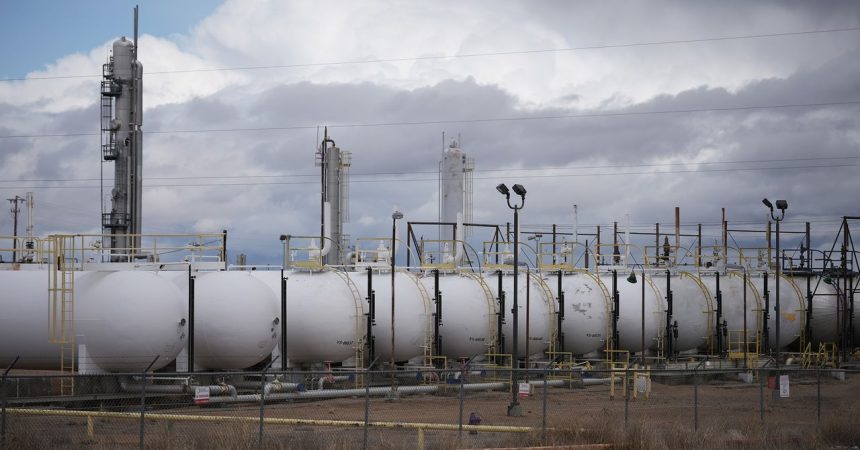
Why gas, and why now? Over the past two years, data center operators have leaned heavily on private, so-called behind-the-meter plants — dedicated facilities that sidestep the notoriously long waits to connect to the public grid. The approach can also spare ordinary ratepayers from footing the bill for higher energy costs, a growing flashpoint as local opposition to data centers spreads. The Trump administration has actively encouraged the trend with a voluntary pledge signed by Microsoft, Meta, Google, and OpenAI, along with several Republican governors and major utilities.
The climate math is ugly. Many of these plants are being built with inefficient turbines that push emissions higher still. WIRED has previously reported that some of these facilities are permitted to emit more greenhouse gases annually than many small- and medium-sized countries.
There’s a geopolitical twist, too. Thanks to this gas rush, the US has once again overtaken China as the country with the most gas projects in the pipeline — reversing a period in the early 2020s when China built faster. Yet China’s own data center expansion looks strikingly different.
- China: “The data center boom in China is really oriented around renewables,” especially solar and hydropower, says Kyle Chan of the Brookings Institution. Many facilities sit in rural areas flush with excess clean energy.
- US: Fast to deploy and economically sensible in the short term, Chan concedes — but “over the long term, you pay a price for that,” both in emissions and in a neglected clean energy sector.
Not every proposed plant will actually get built. Martos points to a thicket of uncertainties — financing, local moratoriums, community opposition, and even turbine supply constraints. Still, the warning is blunt: “If all of these get built, you’re locking in emissions for decades.”