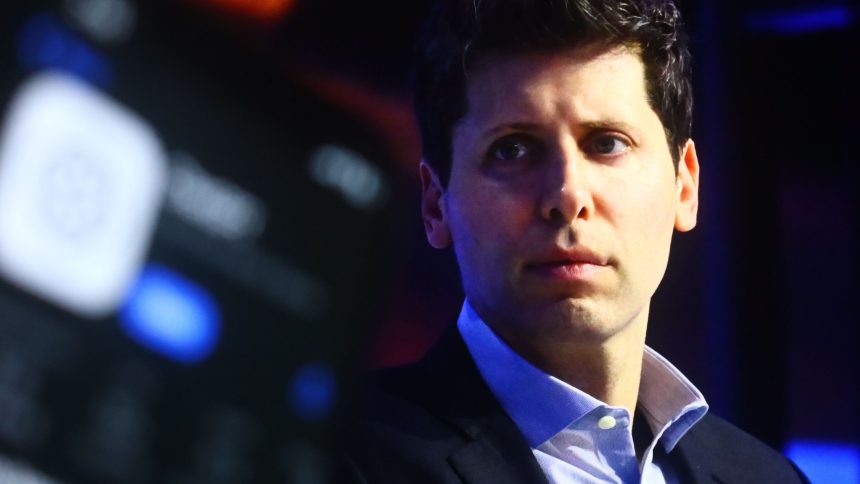
The man running one of the most influential AI companies on the planet has a warning about the very industry he helped ignite: the future of artificial intelligence risks being shaped by a handful of powerful players rather than by the people who will actually live with it.
In a recent podcast interview, OpenAI CEO Sam Altman voiced concern that large companies with vested AI interests are increasingly steering the direction the technology takes. His preferred alternative is blunt and, coming from a tech executive, faintly self-critical: he suggested that people themselves should have a real say in shaping what comes next.
It’s a striking admission from someone whose own company sits near the center of that concentration of power. OpenAI, Google, Microsoft, Meta and a short list of others control the compute, the data and the frontier models that define what modern AI can do. The barriers to entry — enormous training costs, scarce specialized chips, teams of expensive researchers — mean that the decisions with the widest societal consequences are being made in a very small number of boardrooms.
Altman’s framing matters because it reframes the AI debate away from familiar sci-fi anxieties about runaway machines and toward a more immediate, human question: who gets to decide? When a few dominant firms set the defaults — what a model will and won’t say, which languages it serves best, whose values it encodes — those choices ripple out to billions of users who never had a vote.
His concern is doing a lot of work here. Altman isn’t merely calling for a public comment period or a light regulatory touch. His framing points toward something more participatory — a sense that ordinary people, not just shareholders and executives, should have genuine leverage over how these systems evolve.
Of course, there’s an obvious tension. Companies like OpenAI have benefited enormously from the current arrangement, and turning broad principles about people having a stake in the future into concrete mechanisms — governance structures, transparency requirements, meaningful oversight — is far harder than stating them on a podcast. Critics will note that the easiest way for a market leader to shape the conversation is to publicly worry about the problem while continuing to build the very infrastructure that entrenches it.
Still, the comment lands at a moment when the stakes are hard to overstate. AI is being woven into search, productivity software, healthcare tools, education and creative work at remarkable speed. If the people building it are themselves uneasy about who holds the reins, that’s a signal worth taking seriously.
Whether Altman’s words translate into a genuine loosening of control — or remain a memorable soundbite — is the question the industry will be judged on. For now, the head of one of AI’s most powerful players has said out loud what many quietly fear: the future is being decided by too few.