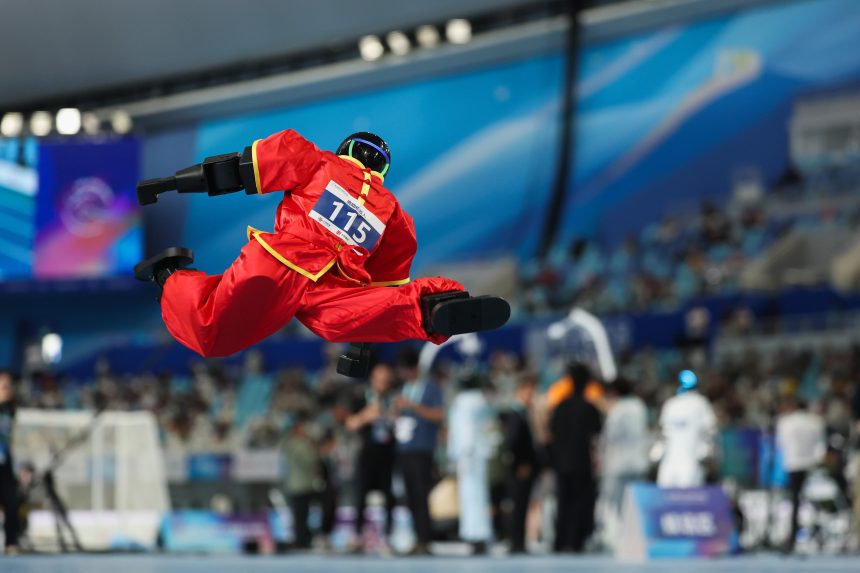
If you’ve ever wanted to watch a robot lose a leg mid-sprint and keep the whole crowd on the edge of their seats, the 2nd World Humanoid Robot Games in Beijing was the place to be. The five-day event wrapped up on August 26, 2026 at the National Speed Skating Oval, and it delivered exactly the kind of high-stakes, occasionally slapstick spectacle that turns industrial hardware into must-watch television.
The failures were half the fun. One machine built by smartphone maker Honor shed a leg while sprinting. Others tumbled in showers of sparks, a reminder that bipedal locomotion remains one of the hardest problems in robotics. But the games weren’t just a blooper reel — they were a showcase of how far Chinese humanoid engineering has raced ahead.
The standout performer came from X-Humanoid, whose TianGong Ultra ran 100 meters in 9.32 seconds. For context, that’s faster than Usain Bolt’s human world record of 9.58 seconds. A robot outpacing the fastest man alive over the sprint distance is the kind of headline that makes you double-check the numbers — and yes, the numbers hold.
Beyond the track, the event doubled as a competitive arena for events you wouldn’t expect from machines, including an optional boxing routine. Watching a humanoid throw punches in a scored performance drives home how quickly these platforms have moved from careful lab demos to public, physical contests where balance, reaction and coordination are all on the line at once.
The games are part of a broader story. China’s humanoid sector is moving fast on several fronts at once:
- Athletic performance — TianGong Ultra’s sub-9.58-second sprint shows how far dynamic movement and control have come.
- Companion robotics — UBTech introduced its U1 series of full-sized, hyper-realistic humanoids at its 2026 global launch event, positioned for daily companionship, emotional support and social assistance rather than factory floors.
- Accessible hardware — the Unitree G1 is available direct for US$13,500, putting a capable humanoid platform within reach of researchers and developers.
What makes the Beijing games worth paying attention to isn’t the falls — although the falls are undeniably entertaining. It’s the pace. A competition format forces manufacturers to push their machines past controlled conditions and into unpredictable, adversarial situations. That’s where the interesting failures happen, and that’s also where the real progress gets measured.
For now, the robots still trip, spark and lose the occasional limb. But when one of them can outrun Usain Bolt over 100 meters, the fail videos start to feel less like a punchline and more like a snapshot of a field moving very, very fast.