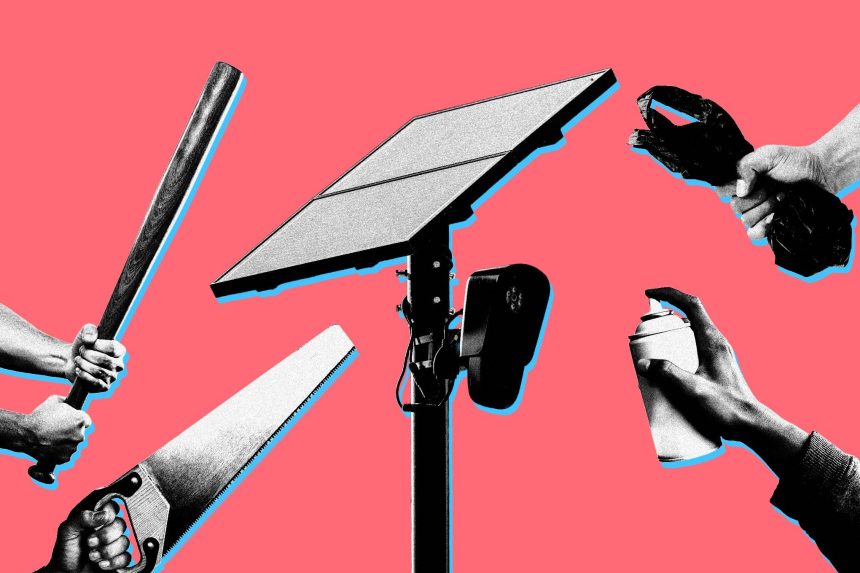
Texas has slammed the brakes on one of the most aggressive AI surveillance rollouts in the country. Governor Greg Abbott issued an order on Thursday night, August 28, 2026, to freeze state funding for Flock cameras — the AI-powered license plate readers that have quietly spread across roadways and neighborhoods nationwide.
The timing was hardly coincidental. Abbott’s move landed just ahead of a Texas Tribune investigation revealing that the state had spent more than $30 million on Flock hardware. Most of that money didn’t come from a general surveillance budget, either. It was raised by attaching a $1 fee to insurance policies — a charge sold to the public as a way to fight catalytic converter theft, not to fund a sprawling camera network.
So what exactly are these things? Flock cameras aren’t your average traffic cams. They’re a distinct breed of automated license plate reader, using artificial intelligence to do far more than snap a plate number. The systems track and store detailed data on vehicle characteristics — make, model and color — along with granular identifiers like bumper stickers and even dents. In practice, that means a Flock camera can build a fingerprint of your car and log its movements, plate obscured or not.
That capability is precisely what’s fueling the backlash. Privacy concerns around Flock have united critics from across the political spectrum, an unusual feat in a country that agrees on very little. When a surveillance tool draws fire from both the left and the right, it tends to signal a genuine civil-liberties problem rather than a partisan talking point.
The concerns aren’t hypothetical. There have been multiple documented incidents of officers being placed on leave or criminally charged for misusing Flock systems. When a database can pinpoint where a specific vehicle has been and when, the potential for abuse — stalking, unauthorized tracking, off-the-books investigations — is baked in. Guardrails only work if someone enforces them, and the reported cases suggest the guardrails haven’t always held.
Abbott’s funding freeze doesn’t uninstall the cameras already bolted to poles across Texas, and it doesn’t rewrite the rules governing how the collected data is used or stored. But it does cut off the money pipeline that made the state’s rapid expansion possible, and it puts a high-profile governor on record questioning the technology’s cost and its collection practices.
For a system that was pitched as a narrow tool against auto-part thieves and grew into a statewide tracking apparatus, the pause marks a notable reckoning. The broader question now is whether other states quietly funding similar deployments will take a second look at what their own dollar-per-policy fees are actually buying.
You can read the full report at The Verge and the Texas Tribune.