Washington has drawn a line in the sand around advanced robotics — but the world’s biggest robot factory floor is on the other side of the Pacific, and it isn’t slowing down.
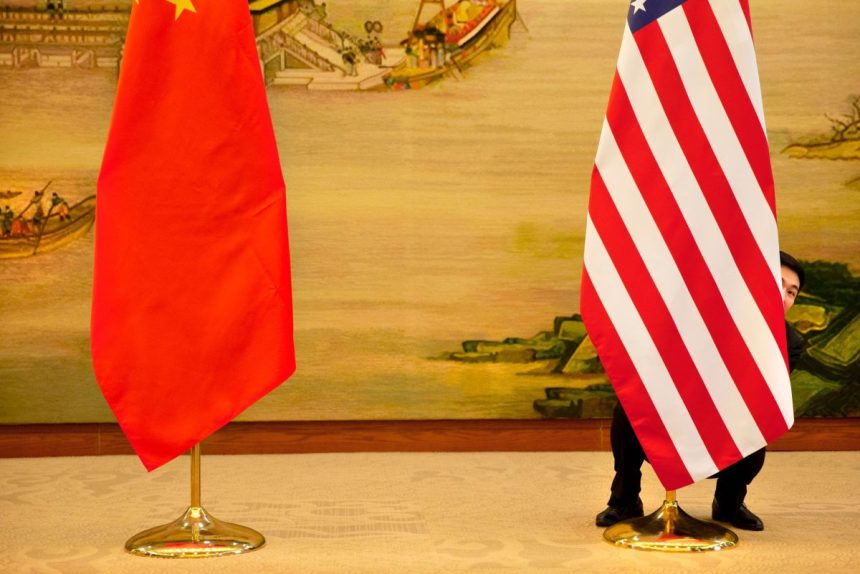
Over July and August, U.S. regulators tightened restrictions on foreign-made advanced robotic systems and slapped steep tariffs on imported drones and their components, both justified on national-security grounds. The drone tariffs take effect in September, with additional component tariffs following in 2027. The FCC’s Covered List, created in 2021 to target telecom and surveillance gear from Huawei, ZTE and Hikvision, has since expanded to foreign-made drones and, most recently, advanced robotic devices.
The timing is telling. Chinese manufacturers have built commanding leads in both drones and humanoids, frequently underpricing rivals in the U.S. and Europe. The obvious question: if Chinese drones and humanoids get shut out of America, where do they go next?
The scale gap is brutal. Global humanoid shipments hit 22,000 units in the first half of this year, the vast majority from Chinese makers, according to Counterpoint. The five largest humanoid producers by shipments — AgiBot, Unitree, Galbot, UBTECH and Leju Robotics — are all Chinese and together accounted for 86% of global shipments in the first half of 2026.
That lead compounds. Cheaper robots get deployed in greater numbers, which generates real-world data that sharpens the technology, while higher volumes push costs down further. “The United States leads in frontier AI, software and semiconductor innovation,” TDK Ventures’ Ankur Saxena told TechCrunch. “China leads in manufacturing scale, supply-chain depth and cost.” His blunt verdict: “You cannot sanction your way around a cost curve. You can only out-build it.”
Chinese firms are driving prices down by pulling the tech stack in-house — Unitree is developing more components internally — and by leaning on automakers like XPeng, which bring chip and vehicle-manufacturing muscle into robotics.
So where does China go? Analysts expect a playbook borrowed from Chinese EV makers: build scale at home, expand abroad, then set up local production. The targets are price-sensitive markets with labor shortages across Europe, Southeast Asia, Latin America and the Middle East.
The drone market already previews this split. Bentzion Levinson, CEO of Virginia-based Heven AeroTech, sees two ecosystems forming: a U.S.-led market around NDAA-compliant systems, and a China-led one built on low-cost, high-volume output. Western firms won’t win the cheap consumer drone fight, he argues, but can compete in long-range autonomous systems for defense and infrastructure. His prediction for the next battleground? Not the drones themselves, but “next-gen energy and payload architecture” — with battery limits becoming a key point of competition.
Agility Robotics welcomed the FCC’s July decision, pointing to its U.S.-designed-and-assembled Digit humanoid while urging continued access to research tools.
The likely outcome isn’t a clean U.S.-China divide. Expect regional markets instead: Chinese players competing on cost worldwide, U.S. and allied makers winning where security matters, and Japan, Taiwan and South Korea — think Hyundai’s Boston Dynamics and Toyota — carving out a middle ground.