Building a house the old-fashioned way is slow, expensive, and stubbornly resistant to automation. Reframe Systems wants to change that, and it just picked up US$40 million to prove the point.
The company, founded in 2022 by former Amazon Robotics leaders, isn’t trying to reinvent the house itself — it’s reinventing where and how houses get made. Instead of a sprawling construction site with crews battling weather and delays, Reframe assembles homes inside compact, highly automated microfactories located near the communities that need housing. Finished components roll out and get installed on-site, cutting the chaos that drives up costs.
The results Reframe claims are the kind that make developers pay attention: homes delivered three times faster and 35% cheaper than traditional construction. Those aren’t marginal gains — they’re the difference between a project that pencils out and one that never breaks ground.
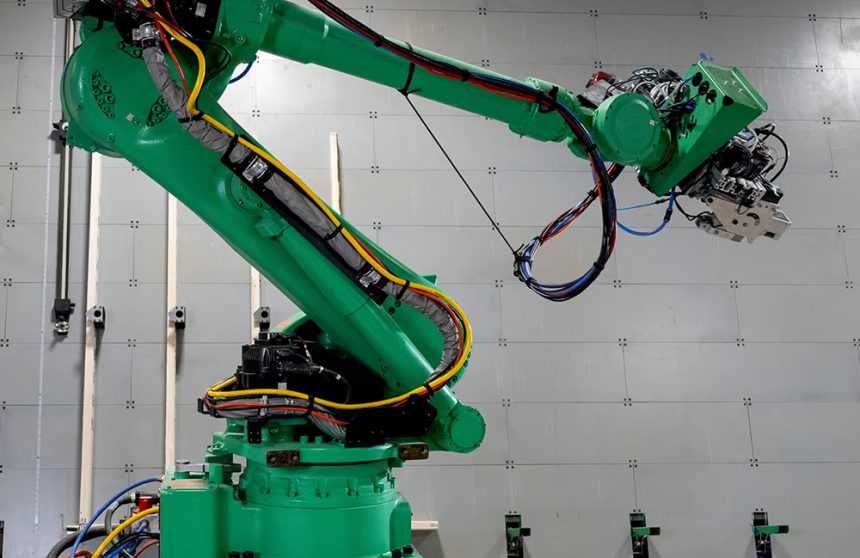
Underpinning the operation is a trio of moving parts. There’s the robotics, which handle the repetitive, precision-heavy work of turning raw material into building components. There’s a software layer the company calls Pixels to Parts, which translates a home’s design directly into machine instructions — bridging the gap between a digital blueprint and a physical panel without an army of intermediaries. And then there’s the microfactory network itself, envisioned as a distributed web of facilities positioned close to demand rather than one giant centralized plant.
That last piece is arguably the most interesting. By keeping factories near communities, Reframe shortens the distance finished parts have to travel, which trims logistics costs and shrinks lead times. It’s a page from the modern manufacturing playbook — think regional fulfillment centers, but for the walls, floors, and framing of actual houses.
The fresh US$40 million is earmarked for scaling that network. Building out microfactories is capital-intensive, and a chunk of change like this signals investor confidence that automated, localized home construction can move from proof-of-concept to something resembling an industry.
It’s worth being clear about what Reframe is and isn’t. This is a business-to-business construction and manufacturing operation, not a gadget you can order online. There’s no per-unit sticker price, and the company hasn’t published spec sheets for individual home models. What it offers is a system — one that treats homebuilding less like artisanal craft and more like a repeatable, software-driven production line.
Whether robotic microfactories can genuinely dent the housing shortage is a question that will take years and a lot of built homes to answer. But the pitch is compelling: apply the discipline of automated manufacturing to one of the least automated corners of the economy, and let robots do what they do best while humans focus on the parts that still need a human touch.